teamLab Island Dance! Art Museum and Learn & Play! Future Park in Sapporo Factory | teamLab

メイン画像
teamLab Island Dance! Art Museum and Learn & Play! Future Park in Sapporo Factory
既往展览
2017.1.01(Sun) - 1.17(Tue)札幌工廠, 北海道
メイン画像
teamLab Island Dance! Art Museum and Learn & Play! Future Park in Sapporo Factory
既往展览
2017.1.01(Sun) - 1.17(Tue)札幌工廠, 北海道

作品

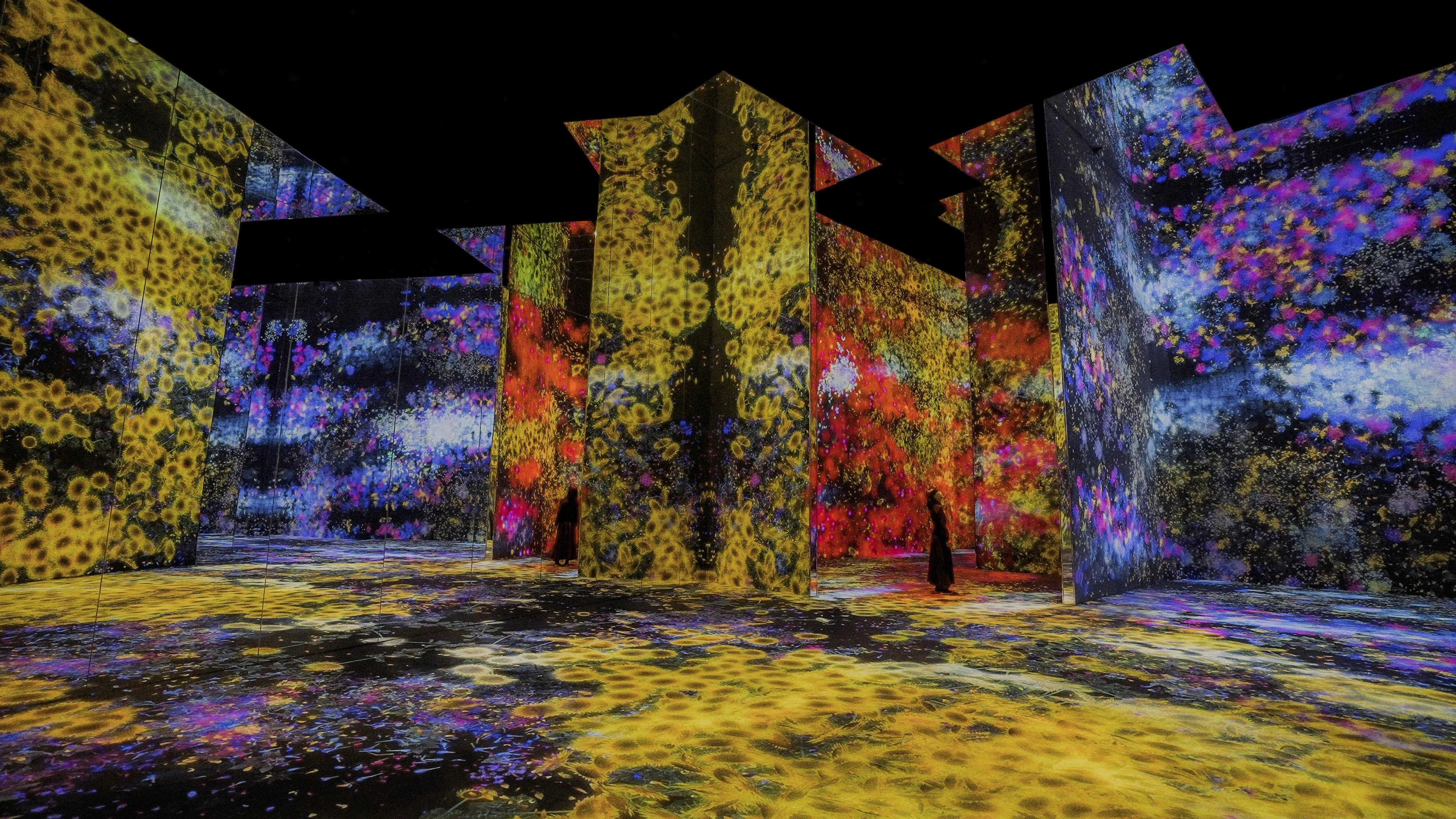
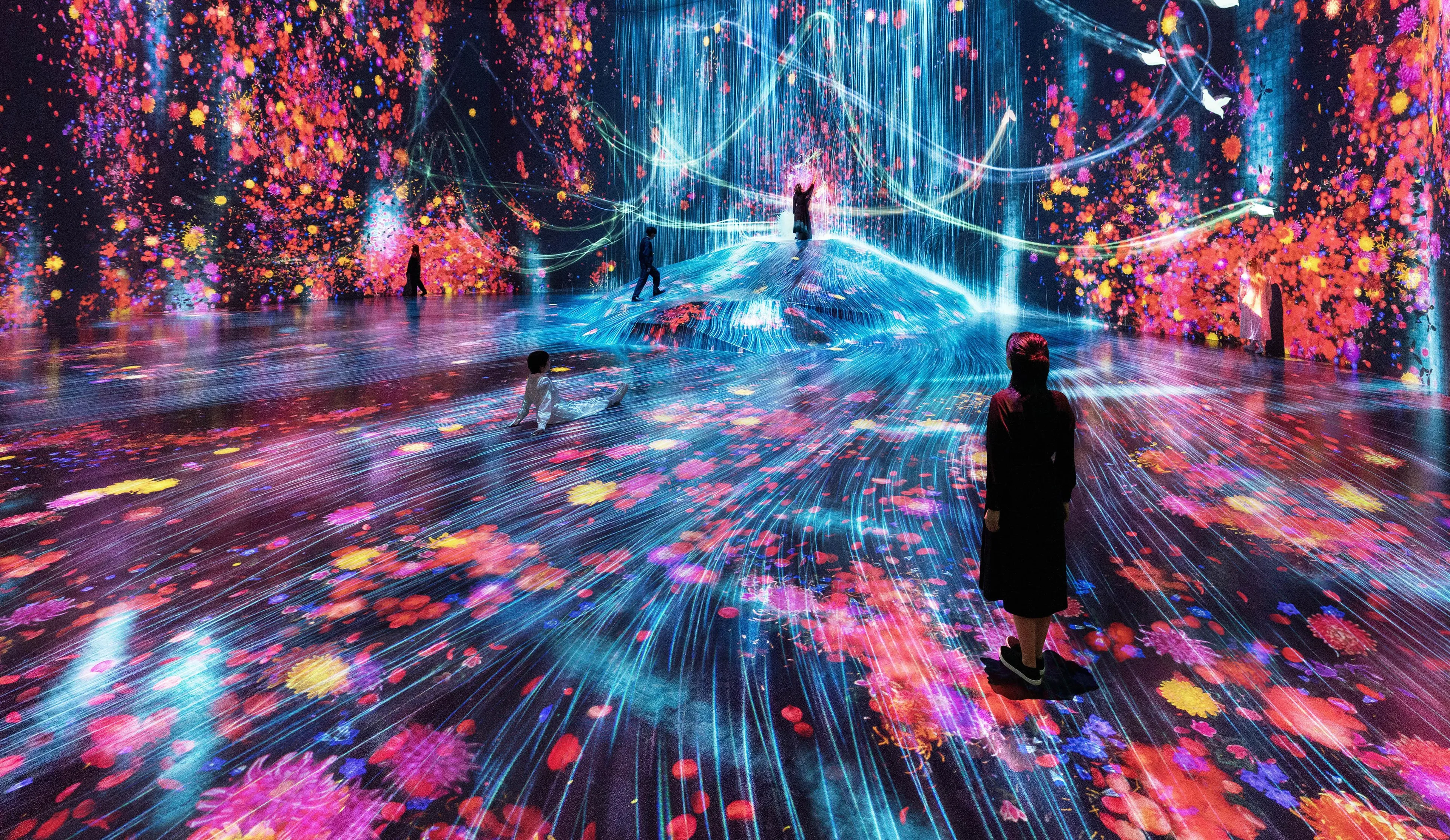
花與人,不為所控卻能共生── 度時如年 / Flowers and People, Cannot be Controlled but Live Together – A Whole Year per Hour

Flowers bud, bloom, and in the course of time, wither and die. While eternally repeating the process of life and death, the places where they grow change gradually. When people stand still, the flowers surrounding them grow and bloom abundantly, but when people touch the flowers or walk around, they scatter and die all at once.The artwork is not a pre-recorded image that is played back; it continues to be rendered in real time under the influence of people's behavior. The picture at this moment can never be seen again.
In spring in the Kunisaki Peninsula, there are many cherry blossoms in the mountains and canola blossoms at their base. A visit to this region led teamLab to wonder how many of these flowers were planted by people and how many of them were native to the environment. It was a place overflowing with flowers, a place of great serenity and contentment. This nature is an ecosystem influenced by human activity, making us feel that nature and humanity are not in conflict. Perhaps a truly comforting nature is one that encompasses human presence as part of the ecosystem. Based on the premise that nature cannot be completely controlled, this artwork explores human activity that lives closely aligned to the rules of nature.
This artwork is an ecological pictorial space drawn through Ultrasubjective Space, which continues to be generated along with the body, others, time, and the environment. Viewers physically walk around and touch inside the world of the artwork, transforming it together with others in the same space.
This pictorial space differs from images or paintings flattened by a lens or single-point perspective. In such images or paintings, space appears behind the picture plane; the space that opens there and the space the viewer inhabits are split, and the picture plane becomes a boundary surface. The viewpoint is fixed at a single point, and bodily freedom is lost.On the other hand, a picture plane formed by Ultrasubjective Space is not a boundary that separates where we are from the world of the artwork. The world of the artwork is not outside a window; it appears as a single field that is continuously connected, without boundary, to the space in which the viewer’s body exists. Moreover, any position — front, back, left, or right — can become a viewpoint, so viewpoints exist in infinite number, and the viewer is physically free to move.Not bound to a single point, the viewer moves their body and lets their eyes roam freely, continually re-composing the world of the artwork as it changes over time, and building the pictorial space within themselves. In that moment, the artwork becomes a centerless, subjective, and embodied pictorial space in which the viewer walks and touches.
In this space, the boundaries between the viewer and the artwork become ambiguous. The artwork transforms simply by the presence of a body there, and the behavior of others also changes the world of the artwork. In conventional art, other people were often considered an obstacle that interferes with a one-on-one relationship with the artwork. However, here, the presence of others enriches and creates new changes in the artwork.
This artwork is an attempt to expand painting from a world on the other side of the screen into a space continuous with the body, others, time, and the environment. The artwork continues to be generated within the relationships among the behavior of people, the life and death of flowers, the passage of time, and the entire space. Here, the painting does not exist on its own as a completed entity; it relates to people's bodies and includes the presence of others, existing as an ecological field without boundaries.
關於 teamLab
teamLab是自2001年起開始活動的藝術團隊。通過團隊創作來探索藝術、科學、技術和自然界交匯點的國際性跨域藝術團隊。由藝術家、程式設計師、工程師、CG動畫師、數學家和建築師等各個領域的專家組成。 teamLab想通過藝術,摸索人與世界的關係和新的認知。人類爲了更好地認知世界,習慣性地把世界分割,並將其視爲具有邊界的事物。我們探索認知的邊界,並試圖超越人類對世界、對時間連續性的邊界的認知。世間萬物都是奇跡般地存在於積年累月且沒有邊界的連續性上的。 teamLab在紐約、倫敦、巴黎、新加坡、矽谷、北京、墨爾本等世界各地舉辦了藝術展。teamLab所開設的大型常設美術館有位於東京台場的「teamLab Borderless」、位於東京豐洲的「teamLab Planets」、位於上海黃浦濱江的「teamLab 無界上海」、位於澳門的「澳門 teamLab 超自然空間」,位於北京的「teamLab無相藝術空間」等等。今後還將有更多的美術館落地在漢堡、烏得勒支、吉達等地。 teamLab的作品被世界各大藝術機構收藏,如墨爾本維多利亞國家美術館(墨爾本)、悉尼新南威爾士州美術館(悉尼)、阿德萊德南澳大利亞藝術畫廊(阿德萊德)、赫爾辛基阿莫斯·雷克斯美術館(赫爾辛基)、舊金山亞洲藝術博物館(舊金山)、洛杉磯現代美術館(洛杉磯)、伊斯坦堡Borusan當代藝術收藏館(伊斯坦堡)、紐約亞洲協會博物館(紐約)。 teamLab is represented by Pace Gallery, Martin Browne Contemporary and Ikkan Art. teamlab.art Biographical Documents

會場資訊

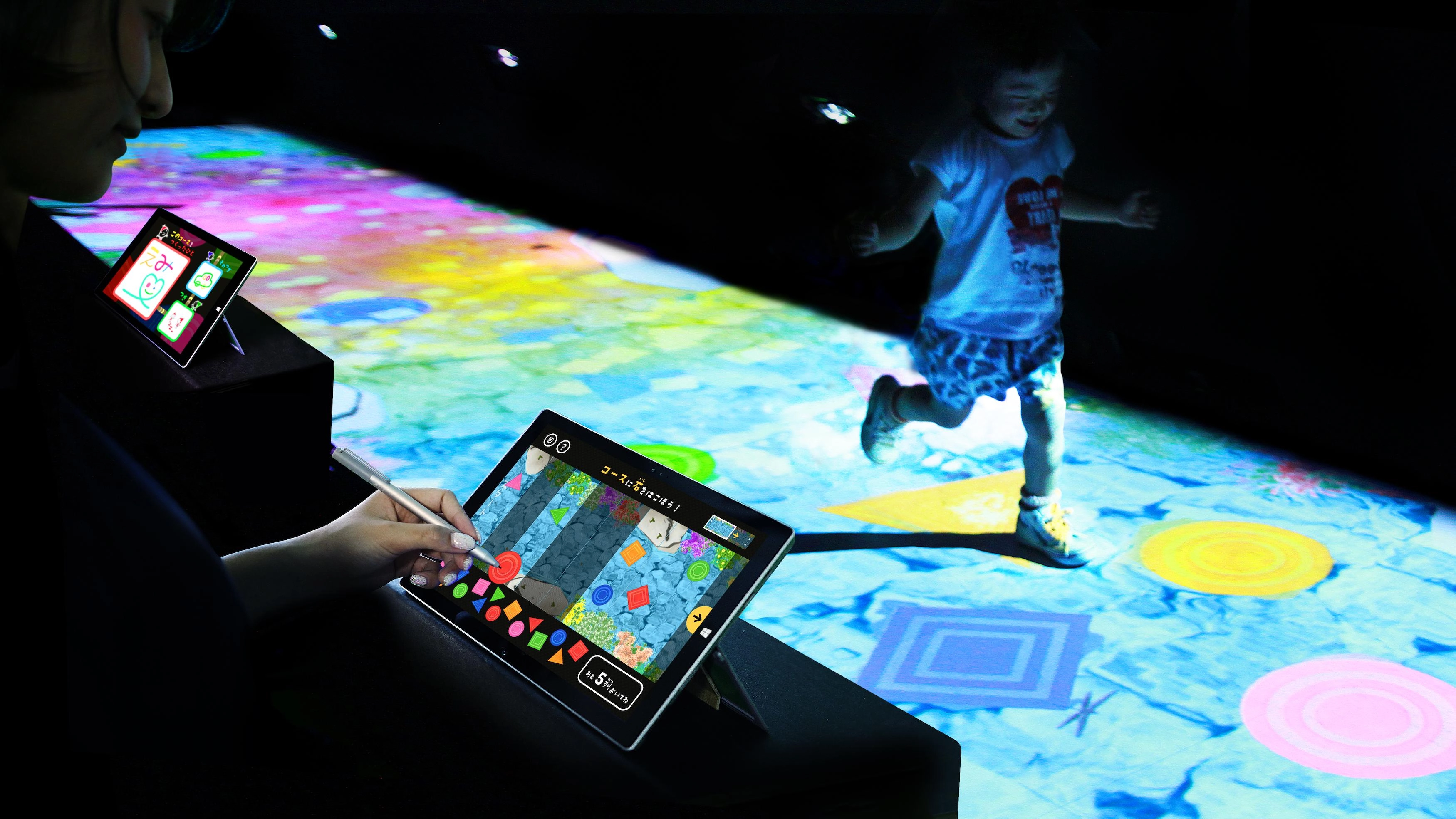
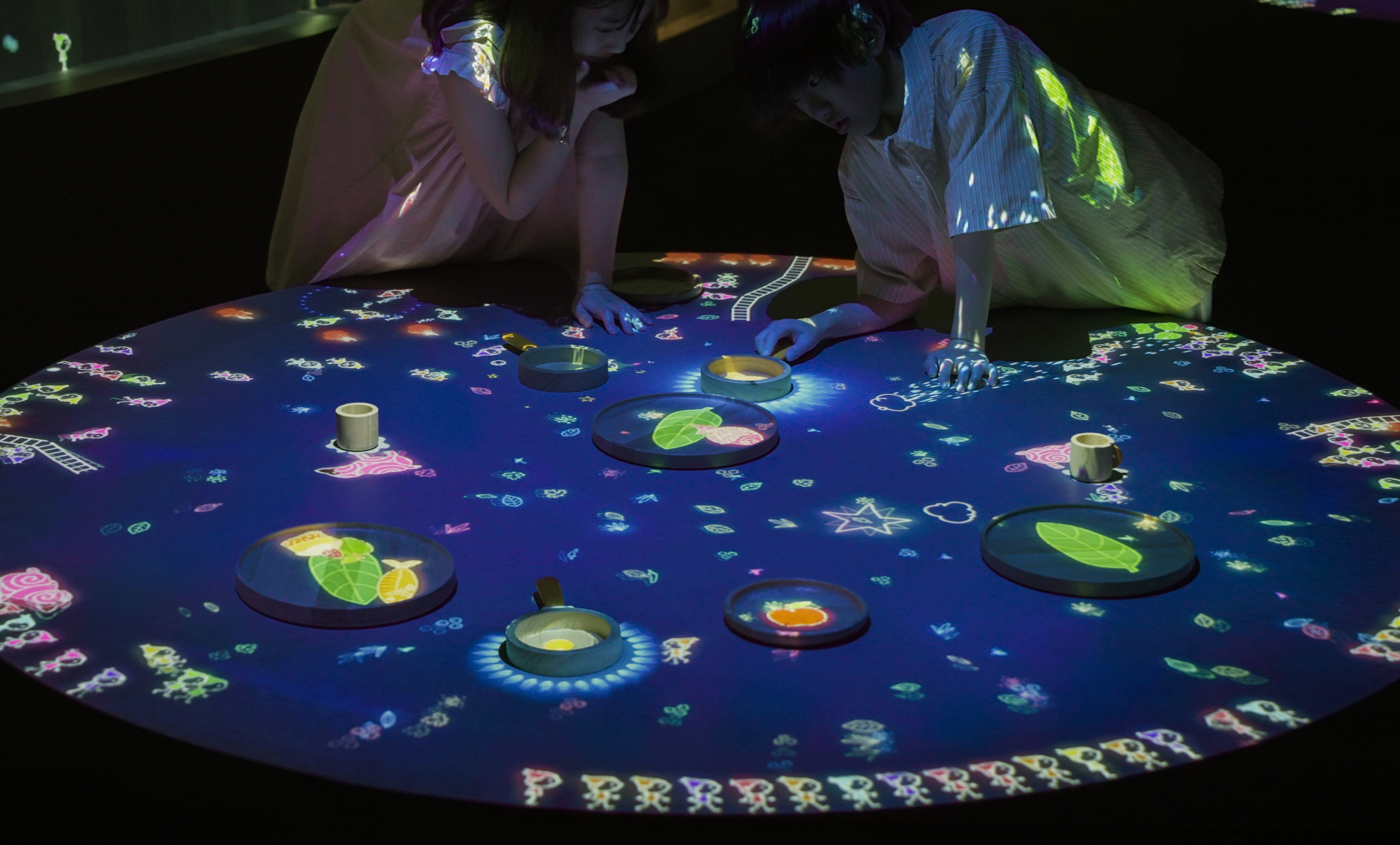
teamLab Island Dance! Art Museum and Learn & Play! Future Park in Sapporo Factory

展期

2017.1.01(Sun) - 1.17(Tue)

展覽會場

第一名:札幌工廠大廳

時間

10:00至20:00(計劃)※最後入場是關閉時間時間前30分鐘
※當擁塞可能做的入場限制

結束日期

沒有閉館日

票價

活動當天門票:初中生以上:1,200日元(提前:1000日元),3歲 - 小學生700日元(提前600日元)
※優惠預售票
平日有限親子兩張門票:1,200日元(1名成人和1名兒童)(除週六,週日及公眾假期)
經過5兩張門票:下午5點以後入場可能:1,600日元(2名成人)
※票處理
七 - 十(050-219網址:WEB:http://7ticket.jp/s/050219),智能手機票DMM.com,HTBCorner(Minami 3 Nishi 4, Chuo, Sapporo underground shopping center Paul Town),Doshin播放指南(Odorinishi 3, Chuo, Sapporo Doshin Building 1F
集團率是相同的費用,並提前購票10人以上※。
※減半收取門票一天門票銷售辦事處身體殘疾會場筆記本的唯一一天的所有者和護理人員(最多1人)
再入不能原理※。
※每張門票的第一會場,會場第二票通用

主辦單位

"teamLab Islands Dance! Art Museum and Learn & Play! Future Parks"Sapporo executive committee

特別合作

札幌工廠

合作

Pentel , SAPPORO DAIDO PRINTING Co.,Ltd., Hokkaido Shimizu

協辦單位

Sapporo, Sapporo City Board of Education