
teamLab IsLands: Dance! Art Museum, Learn & Play! Interactive Theme Park | teamLab

メイン画像
ロゴ画像
既往展览
2016.5.01(Sun) - 7.31(Sun)Central World, 曼谷
メイン画像
ロゴ画像
既往展览
2016.5.01(Sun) - 7.31(Sun)Central World, 曼谷

作品

花與人,不為所控卻能共生── 度時如年 / Flowers and People, Cannot be Controlled but Live Together – A Whole Year per Hour

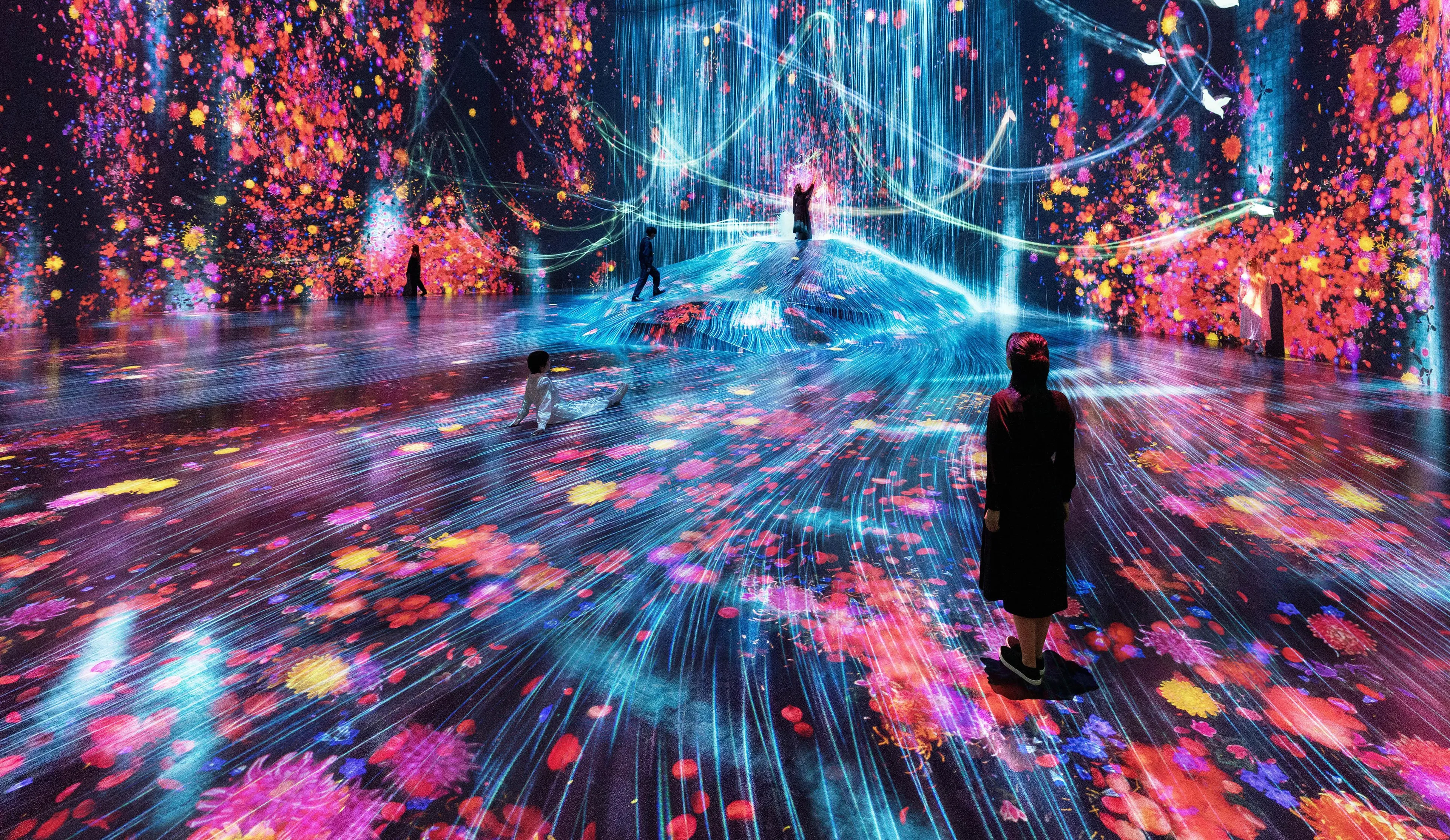
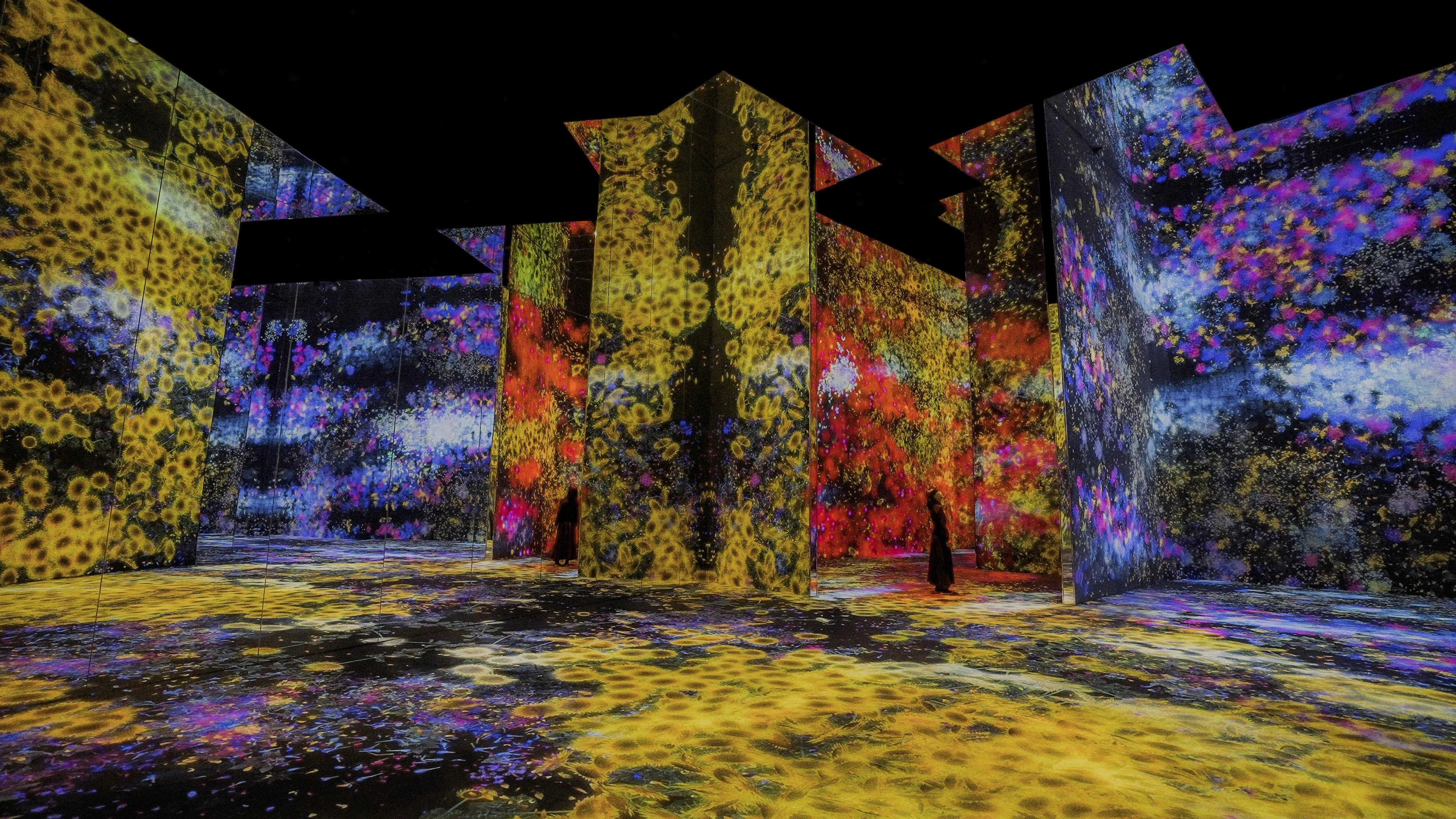
Flowers bud, bloom, and in the course of time, wither and die. While eternally repeating the process of life and death, the places where they grow change gradually. When people stand still, the flowers surrounding them grow and bloom abundantly, but when people touch the flowers or walk around, they scatter and die all at once.The artwork is not a pre-recorded image that is played back; it continues to be rendered in real time under the influence of people's behavior. The picture at this moment can never be seen again.
In spring in the Kunisaki Peninsula, there are many cherry blossoms in the mountains and canola blossoms at their base. A visit to this region led teamLab to wonder how many of these flowers were planted by people and how many of them were native to the environment. It was a place overflowing with flowers, a place of great serenity and contentment. This nature is an ecosystem influenced by human activity, making us feel that nature and humanity are not in conflict. Perhaps a truly comforting nature is one that encompasses human presence as part of the ecosystem. Based on the premise that nature cannot be completely controlled, this artwork explores human activity that lives closely aligned to the rules of nature.
This artwork is an ecological pictorial space drawn through Ultrasubjective Space, which continues to be generated along with the body, others, time, and the environment. Viewers physically walk around and touch inside the world of the artwork, transforming it together with others in the same space.
This pictorial space differs from images or paintings flattened by a lens or single-point perspective. In such images or paintings, space appears behind the picture plane; the space that opens there and the space the viewer inhabits are split, and the picture plane becomes a boundary surface. The viewpoint is fixed at a single point, and bodily freedom is lost.On the other hand, a picture plane formed by Ultrasubjective Space is not a boundary that separates where we are from the world of the artwork. The world of the artwork is not outside a window; it appears as a single field that is continuously connected, without boundary, to the space in which the viewer’s body exists. Moreover, any position — front, back, left, or right — can become a viewpoint, so viewpoints exist in infinite number, and the viewer is physically free to move.Not bound to a single point, the viewer moves their body and lets their eyes roam freely, continually re-composing the world of the artwork as it changes over time, and building the pictorial space within themselves. In that moment, the artwork becomes a centerless, subjective, and embodied pictorial space in which the viewer walks and touches.
In this space, the boundaries between the viewer and the artwork become ambiguous. The artwork transforms simply by the presence of a body there, and the behavior of others also changes the world of the artwork. In conventional art, other people were often considered an obstacle that interferes with a one-on-one relationship with the artwork. However, here, the presence of others enriches and creates new changes in the artwork.
This artwork is an attempt to expand painting from a world on the other side of the screen into a space continuous with the body, others, time, and the environment. The artwork continues to be generated within the relationships among the behavior of people, the life and death of flowers, the passage of time, and the entire space. Here, the painting does not exist on its own as a completed entity; it relates to people's bodies and includes the presence of others, existing as an ecological field without boundaries.

涅槃 / Nirvana

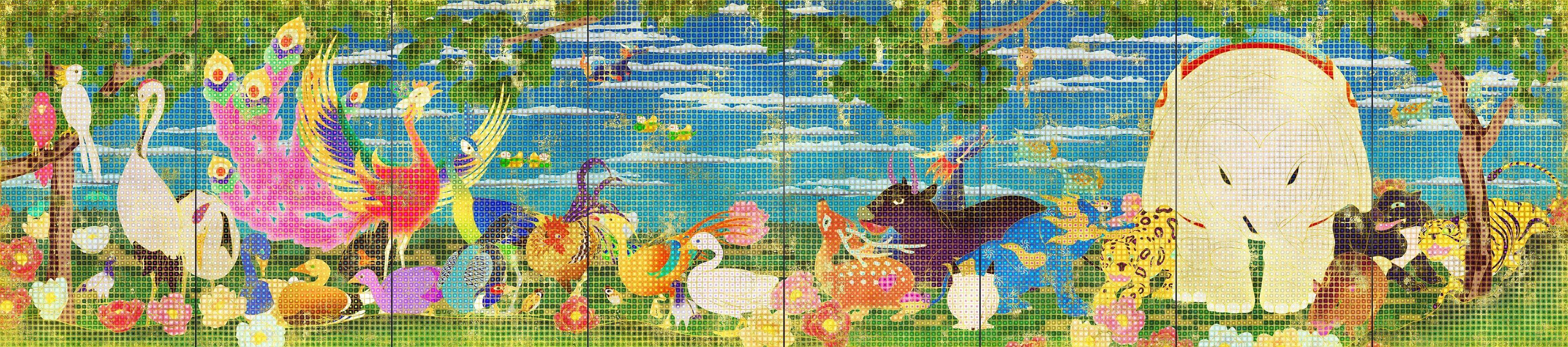
伊藤若衝(Jakuchu Ito,1716-1800)是日本早期現代畫家,江戶中期活躍於京都。他的繪畫風格獨特,作品表面由成千上萬個色彩各異的方塊組成。《涅槃》(Nirvana)的創作靈感源於屏畫《鳥》、《動物》、《開花植物和樹》、《花》以及《鳥和動物》。

看到若衝的方塊繪畫,我們便想到電腦生成的像素藝術。據說若衝創作方塊繪畫的靈感源於工業化大生產背景下無法批量生產設計的西陣織(產於京都西陣的傳統優質絲綢織物)。而像素藝術也同樣是功能缺陷的產物。現在像素藝術的功能缺陷已經克服,且其作為廣受歡迎的表達形式也得以保留。這也許能夠解釋為什麼看到若衝的方塊作品,我們便會本能地想到數字藝術。在他的作品中,色彩也是在方塊內混合了不同顏色的光學現像的產物。在印像派和點彩派出現之前,若衝似乎就懂得運用光學混彩了。

這件藝術作品是在三維虛擬空間中創作的,三維動物在空間中活動。teamLab將三維空間轉化為超主觀空間。用方塊色譜對三維空間中的顏色進行分割。例如,如果一個方塊中填充的是紅色和藍色,那麼在三維空間中,這個方塊便會以紫色呈現。
   
雖然空間不斷移動,屏幕上的方塊卻是固定的,所以相對於空間,方塊內的顏色在不同的時刻是不斷變化的。遠觀整個畫面,混合後的顏色光彩鮮亮,空間中的動植物世界也會隨著時間的推移緩慢變動。近觀畫面,會發現每個方塊內的顏色都在飛快地變化著。在這件作品中,同時存在兩套時間軸。

局部的方塊被方塊中含量最多的顏色塗滿,形成了抽像的世界。動植物在空間上變化,但在畫面內被固定的方塊抽像化。形成與像素藝術不同的全新視覺體驗。
而且作品把在空間上變化的立體動植物,用被固定的三維方塊抽像化後表現出來全新視覺體驗,融入到立體方塊畫的動畫之中。

Flower and Corpse Glitch Set of 12

由12幅畫所組成,以「自然與文明的衝突、循環、共生」為主題的故事性繪畫。

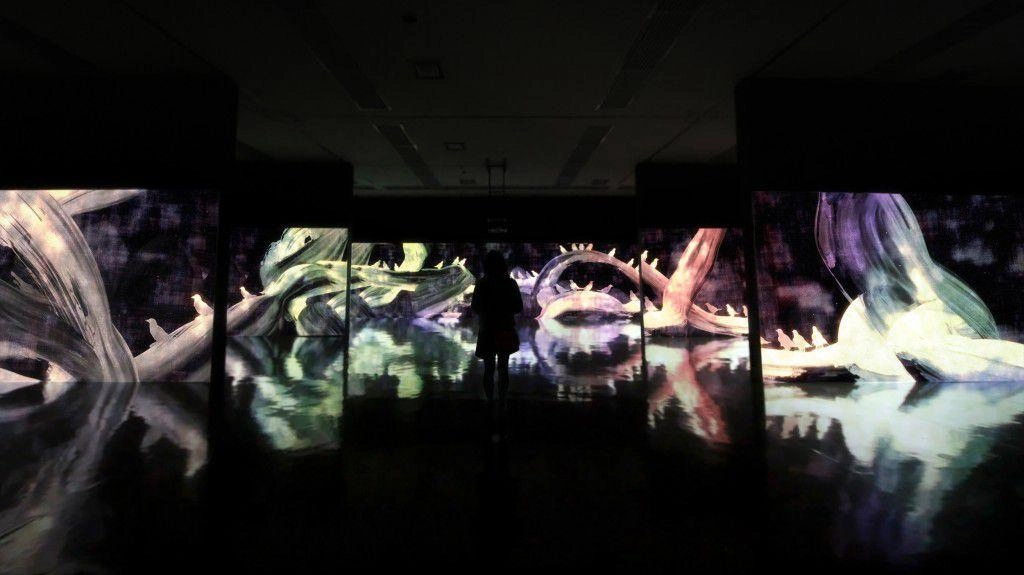
在電腦上的三次元空間裡建構出立體性的作品世界,並根據「超主觀空間」的理論影像化。作品的表面會逐漸剝落,然後讓作品內側浮現出來。

在電腦之中,三次元物體的形狀其實是透過網狀的線條構造中所記載的抽像性高次元情報來表現的。也就是說,在電腦中以三次元所描繪出來的物體,只要剝除其表面就可以發現它是由網狀的線條構造所組成。本作品藉由剝除表面讓觀賞者得以制作過程的一角。

1:花與屍 十二幅組 都城與貴族
繁華榮盛的都城。

2:花與屍 十二幅組 繁榮與災厄
都城之中開始流行起疾病。

3:花與屍 十二幅組 山之民與祭典
追尋著疾病,光源氏來到一座山村。村裡正舉行祭典感謝自然賜與的恩惠。

4:花與屍 十二幅組 森林與日常生活
祭典結束之後,回歸日常的村子雖然受到疾病的影響,但是人們依舊勇敢地活下去。村人伐木來發展文明,但同時也接受自然的各種恩惠,過著富足的生活。

5:花與屍 十二幅組 神木與八歧大蛇
由於都城的不斷發展,山村也被委托砍下更多的樹木,村民們在工作時砍倒了位在深山裡的巨樹。在巨樹倒下之後,八歧大蛇突然就出現了。憤怒的八歧大蛇降下大雨引發了洪水。

6:花與屍 十二幅組 八歧大蛇與森林眾神
在發狂的八歧大蛇推倒山村裡的民家之後,森林裡的眾神們也跟著開始襲擊人們。

7:花與屍 十二幅組 戰場與兵器
山村雇用了武士們,很快地就有許多武士的集團聚集到村子裡。武士們與八歧大蛇和森林眾神們的戰爭開始了。

8:花與屍 十二幅組 勝利與破壞
武士們使用著火箭等文明裡誕生的道具。在激烈的戰鬥之後,武士們終於獲勝了。

9:花與屍 十二幅組 荒野與飢荒
最後大地上只剩下被燃燒殆盡的森林殘骸。山村失去了自然的恩惠,村民們想到即將到來的飢荒而絕望。

10:花與屍 十二幅組 花與屍
光源氏看著八歧大蛇與森林眾神們的屍體呆然無語。困惑的光源氏在八歧大蛇的屍體上撒下種子。結果屍體上開始冒出嫩芽,很快地就開出了繁花。花朵們快速地成長接著變成樹木,森林又重新出現了。

11:花與屍 十二幅組 森林與祭典
山之子民們重新接受了森林的恩惠,再次發展自己的文明。但是這一次他們下定決心要與森林生死與共,山村裡再次舉行了熱鬧的祭典。

12:花與屍 十二幅組 都城與祭典
都城裡流行的疾病逐漸穩定下來,雖然原因還是不清楚,但是為了慶祝開始舉行祭典。
關於 teamLab
teamLab是自2001年起開始活動的藝術團隊。通過團隊創作來探索藝術、科學、技術和自然界交匯點的國際性跨域藝術團隊。由藝術家、程式設計師、工程師、CG動畫師、數學家和建築師等各個領域的專家組成。 teamLab想通過藝術,摸索人與世界的關係和新的認知。人類爲了更好地認知世界,習慣性地把世界分割,並將其視爲具有邊界的事物。我們探索認知的邊界,並試圖超越人類對世界、對時間連續性的邊界的認知。世間萬物都是奇跡般地存在於積年累月且沒有邊界的連續性上的。 teamLab在紐約、倫敦、巴黎、新加坡、矽谷、北京、墨爾本等世界各地舉辦了藝術展。teamLab所開設的大型常設美術館有位於東京台場的「teamLab Borderless」、位於東京豐洲的「teamLab Planets」、位於上海黃浦濱江的「teamLab 無界上海」、位於澳門的「澳門 teamLab 超自然空間」,位於北京的「teamLab無相藝術空間」等等。今後還將有更多的美術館落地在漢堡、烏得勒支、吉達等地。 teamLab的作品被世界各大藝術機構收藏,如墨爾本維多利亞國家美術館(墨爾本)、悉尼新南威爾士州美術館(悉尼)、阿德萊德南澳大利亞藝術畫廊(阿德萊德)、赫爾辛基阿莫斯·雷克斯美術館(赫爾辛基)、舊金山亞洲藝術博物館(舊金山)、洛杉磯現代美術館(洛杉磯)、伊斯坦堡Borusan當代藝術收藏館(伊斯坦堡)、紐約亞洲協會博物館(紐約)。 teamLab is represented by Pace Gallery, Martin Browne Contemporary and Ikkan Art. teamlab.art Biographical Documents

會場資訊

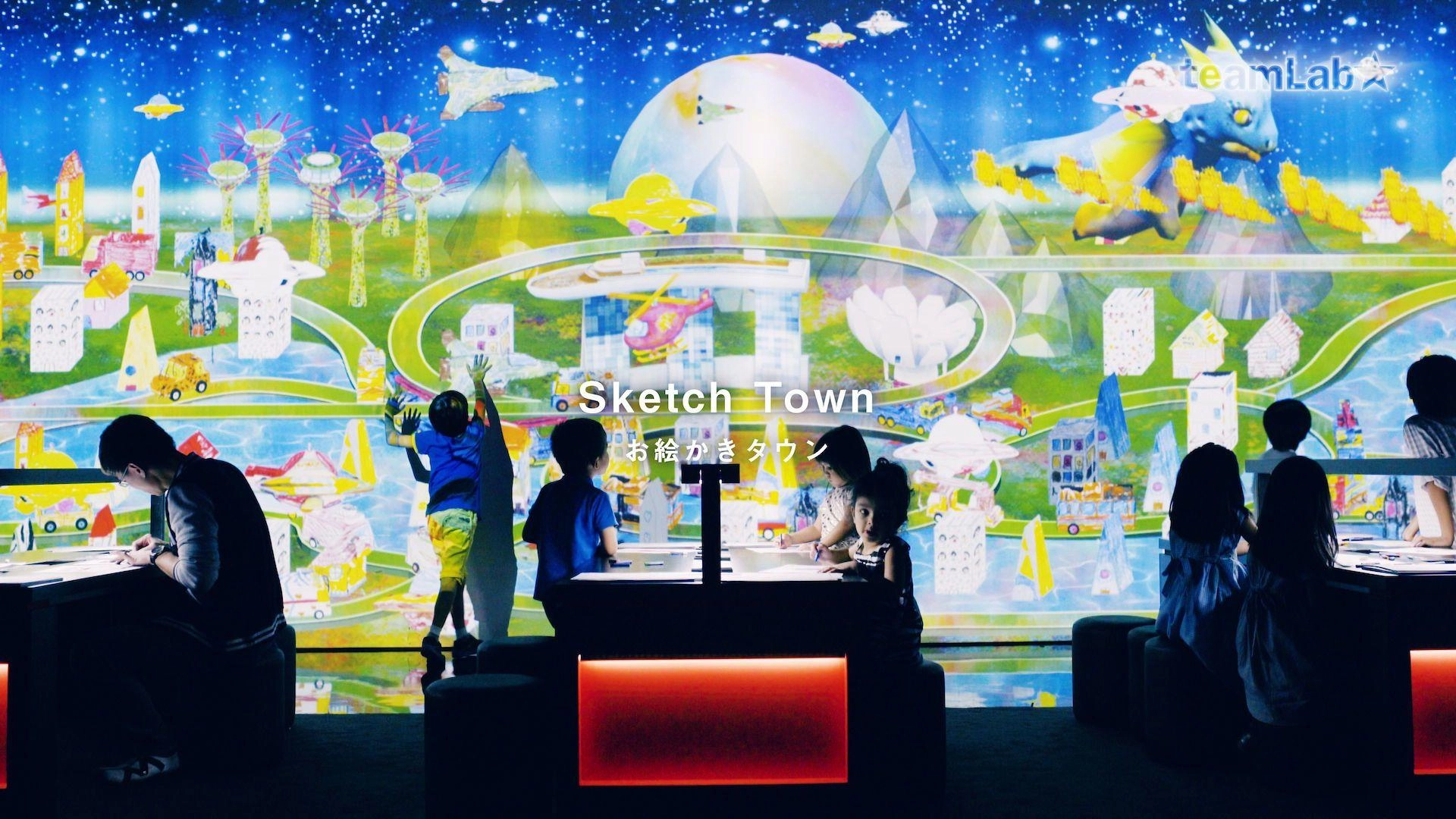
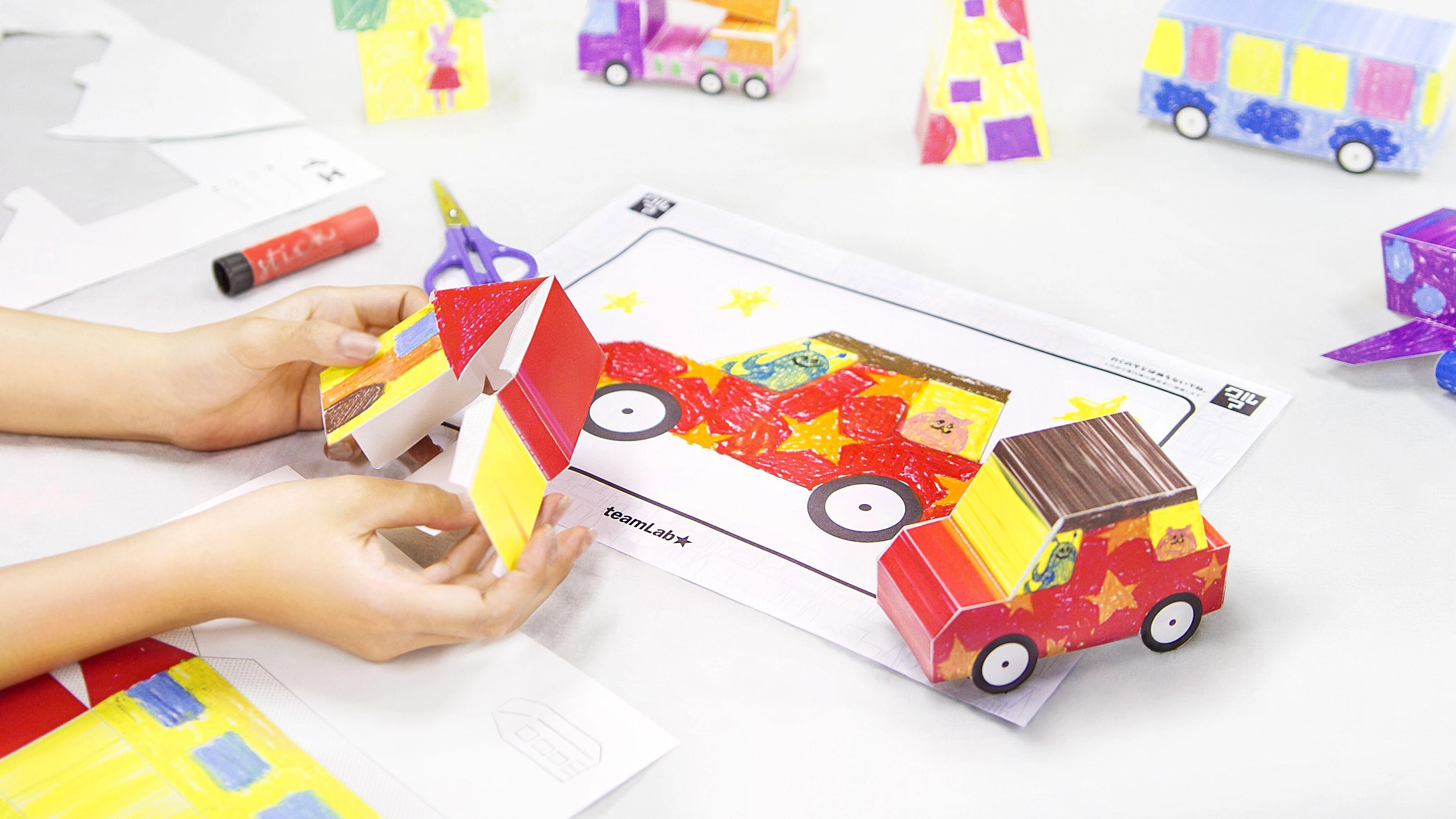
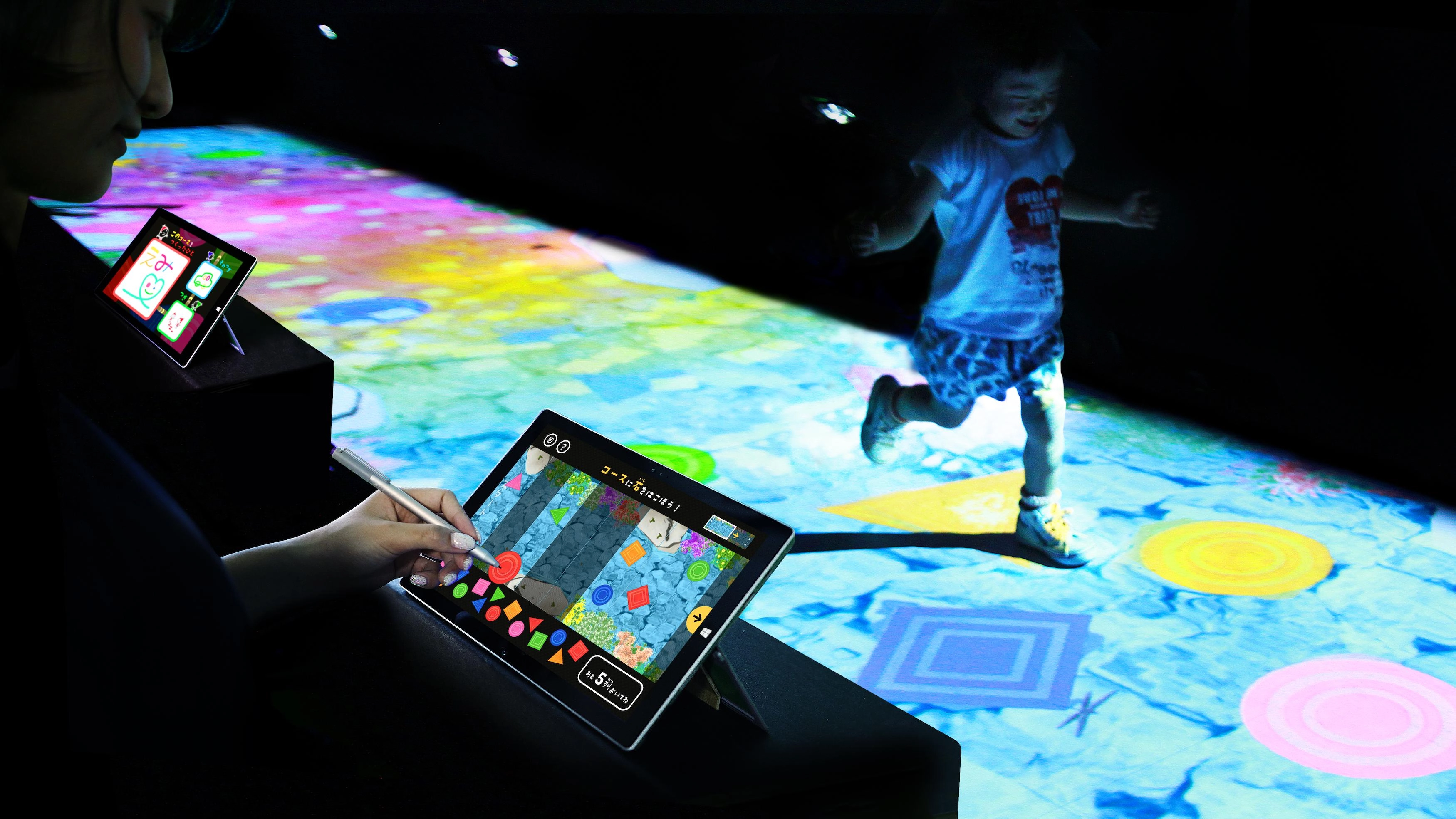
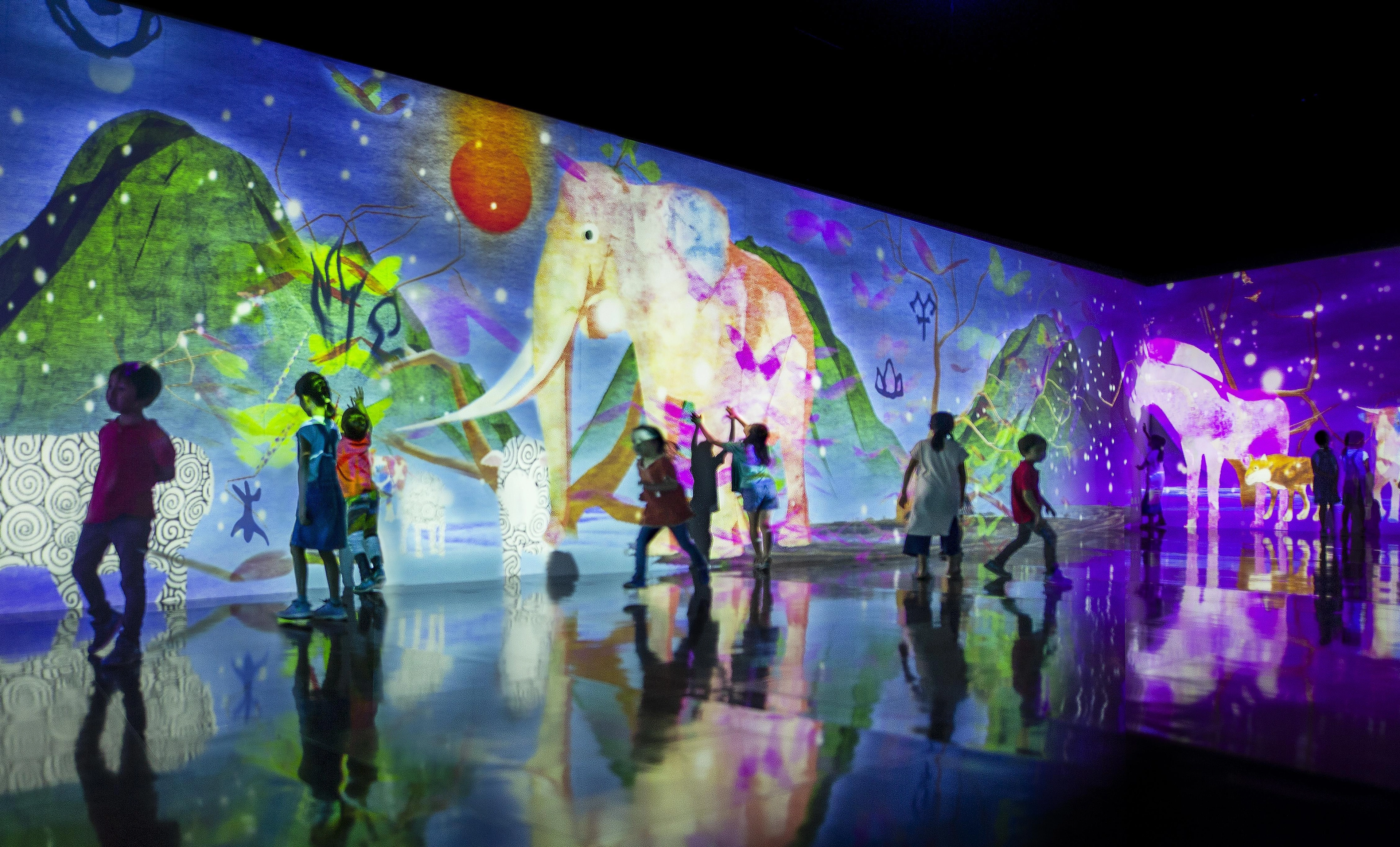
teamLab IsLands: Dance! Art Museum, Learn & Play! Interactive Theme Park

展期

2016.5.01(Sun) - 7.31(Sun)

時間

A.10:00-13:00
B.13:00-16:00
C.16:00-20:00

價格

350 baht *less than 80 cm of infant is free.

交通指南

地址

THE SPACE, 3rd Floor, CentralWorld
九分之九百九十九拉瑪一世路,10330,泰國

聯合舉辦

BEC-Tero

Co-Sponsors

Snack Jack, Master Art, Air Asia X

Equipment cooperation

Panasonic