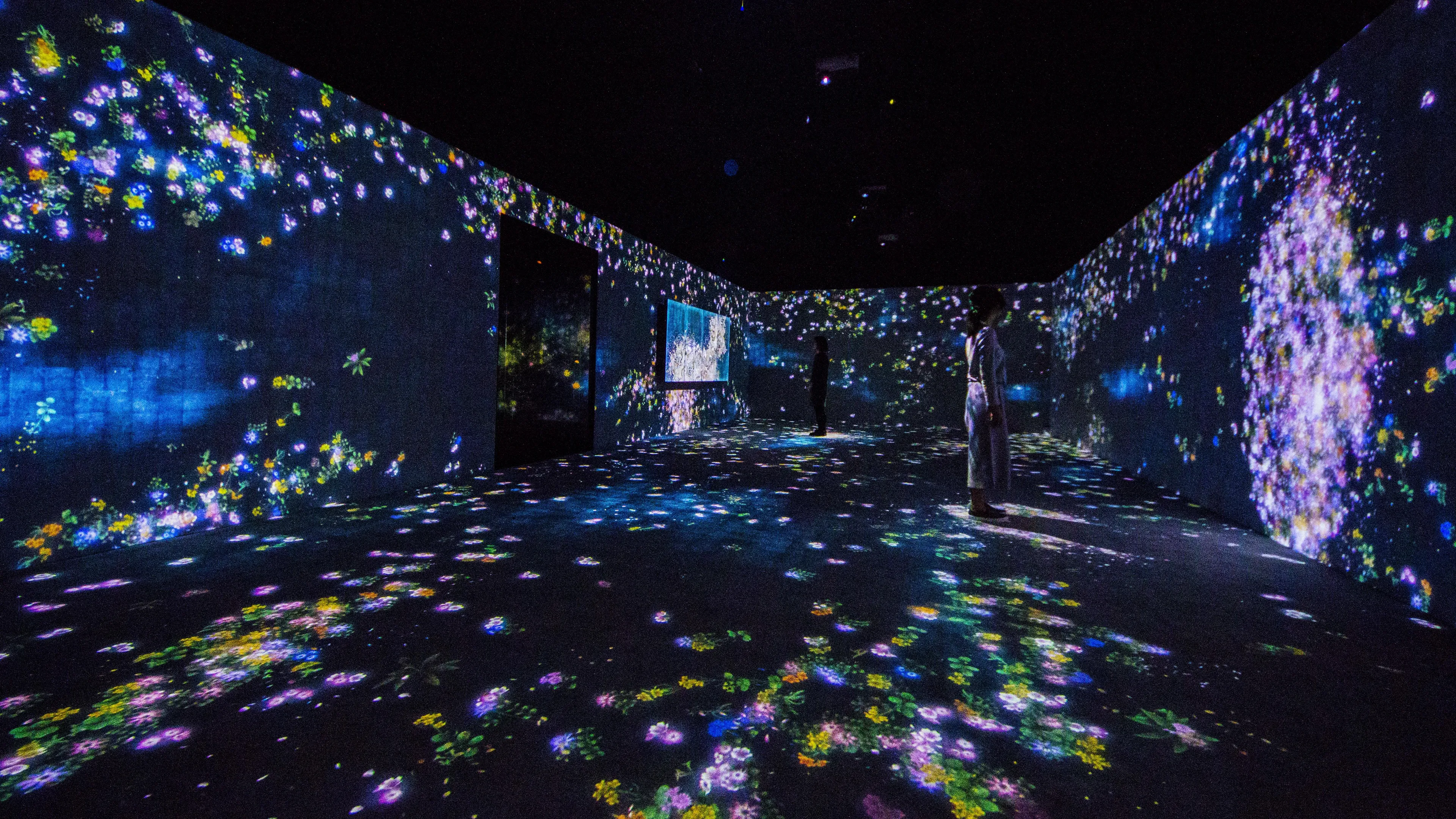
Relationships Among People
2001
An artwork is not an object that is complete in itself, but a field that is continuous with a viewer’s body, the bodies of others, and the environment, and that continues to be generated over time. People’s bodies, and the presence of others in the same space, are not external to the artwork, but are elements that bring the world of the artwork into existence. Relationships Among People is a concept that expands the one-on-one relationship between the artwork and an individual into a relationship between the artwork and people.
Up until now, many artworks were based on a relationship with an individual. A painting does not change due to the presence of a viewer. It does not change due to the behavior of the person next to it. In such a relationship, others in the same space can sometimes be perceived as an existence that obstructs vision, disrupts concentration, or interferes with the relationship with the artwork.
However, when an artwork changes due to the presence of the viewer, the boundary between the viewer and the artwork becomes ambiguous. The artwork is brought into existence for the first time only when the viewer becomes a part of the artwork. Similarly, when the artwork changes due to the presence of others, they also become a part of the artwork.
Whether or not others intend to intervene in the artwork is irrelevant. When the artwork changes due to the presence of others, and that change itself is internalized within the work, others are no longer a presence that interferes when viewing the artwork. Others are transformed into an existence that creates new changes and enriches the artwork.
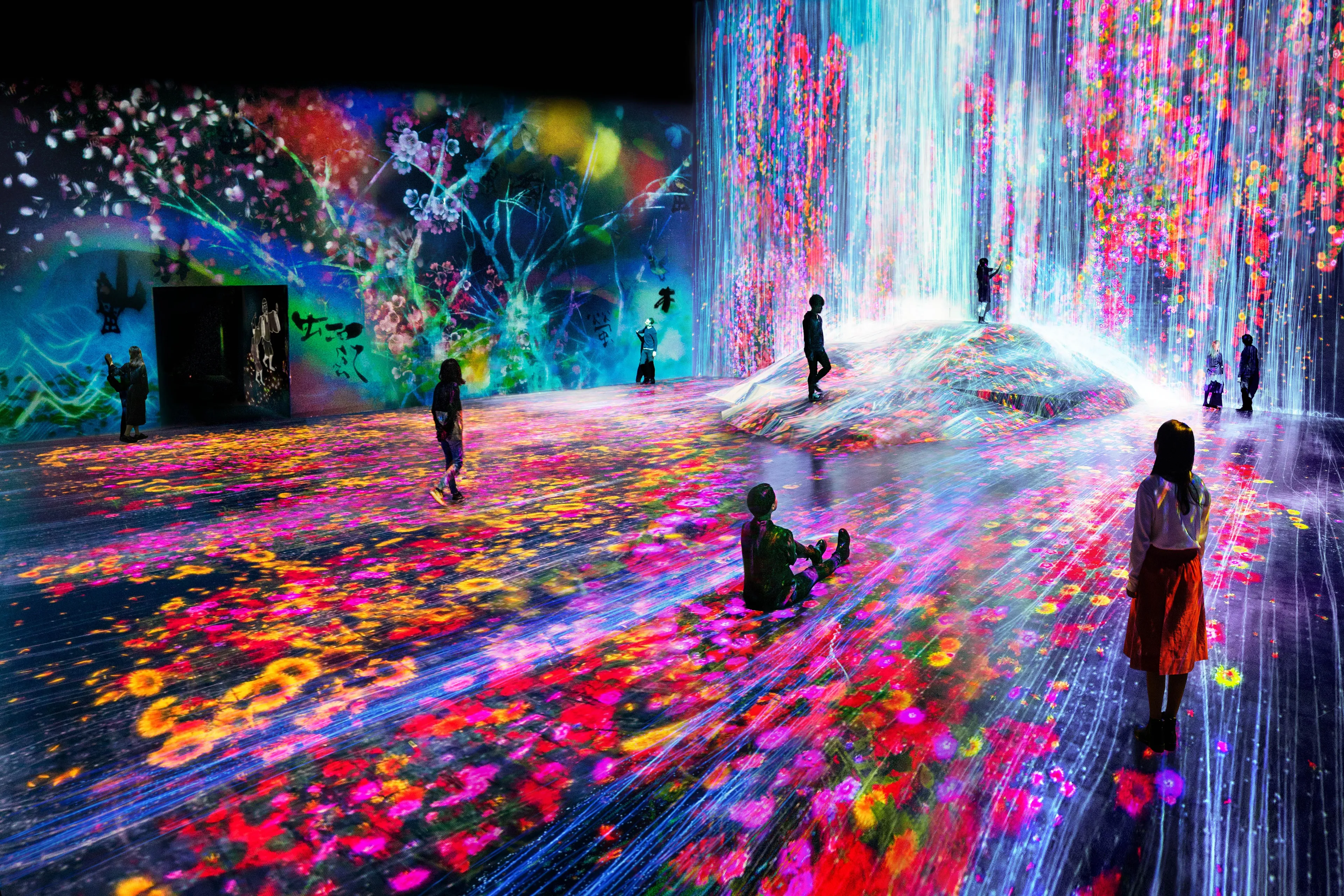
The question is neither about the viewer participating in the artwork nor how the viewer manipulates the artwork. It is about how the artwork changes the relationships among people themselves. The relationship between the artwork and an individual is expanded into a relationship between the artwork and multiple people. Viewers are not observers looking from outside the artwork; they engage with the world of the artwork through their own bodies, and at the same time, experience the artwork's world that changes due to the presence of others.
This concept expands differently depending on the format of the artwork.
In Flowers and People, Cannot be Controlled but Live Together (2014-), this concept is realized in conjunction with Ultrasubjective Space. Through Ultrasubjective Space, the space where the pictorial world exists and the space where the viewer's body is located are continuously connected without boundaries, and viewers walk around inside the pictorial space. The artwork transforms simply by the presence of the body, and the behavior of others changes the world of the artwork. The same instance of a picture can never be seen again. Painting is expanded into an ecosystem-like pictorial space that continues to be generated along with the body, others, time, and the environment.
In the series of Resonant Collective Sculpture that continues from teamLabBall (2009-) to Resonating Microcosms (2020-), this concept is expanded into a network-like existence. The body, others, wind and rain, wild animals, adjacent sculptures, and other surrounding artworks are all connected to the same responsive field, without distinction between human and non-human. It is not only humans that move the artwork. In this ecosystem-like responsive field where both humans and non-humans participate, the boundaries of the sculpture are not limited to the contours of individual objects.
Expanding beyond the realm of art, this concept extends into the city.
In modern cities, the presence of others has often been perceived as something unpleasant to people. The presence of others around oneself, who cannot be understood or controlled, was something to be endured and accepted. This is because the city existed as a collection of fixed objects that did not change due to the presence of oneself or others, and did not internalize the behavior of people.
However, if the city changes due to the presence and behavior of people, the presence of others has the potential to enrich the city. The question regarding the relationships among people in art will serve as an opportunity to rethink the nature of the city.


FEATURED WORKS
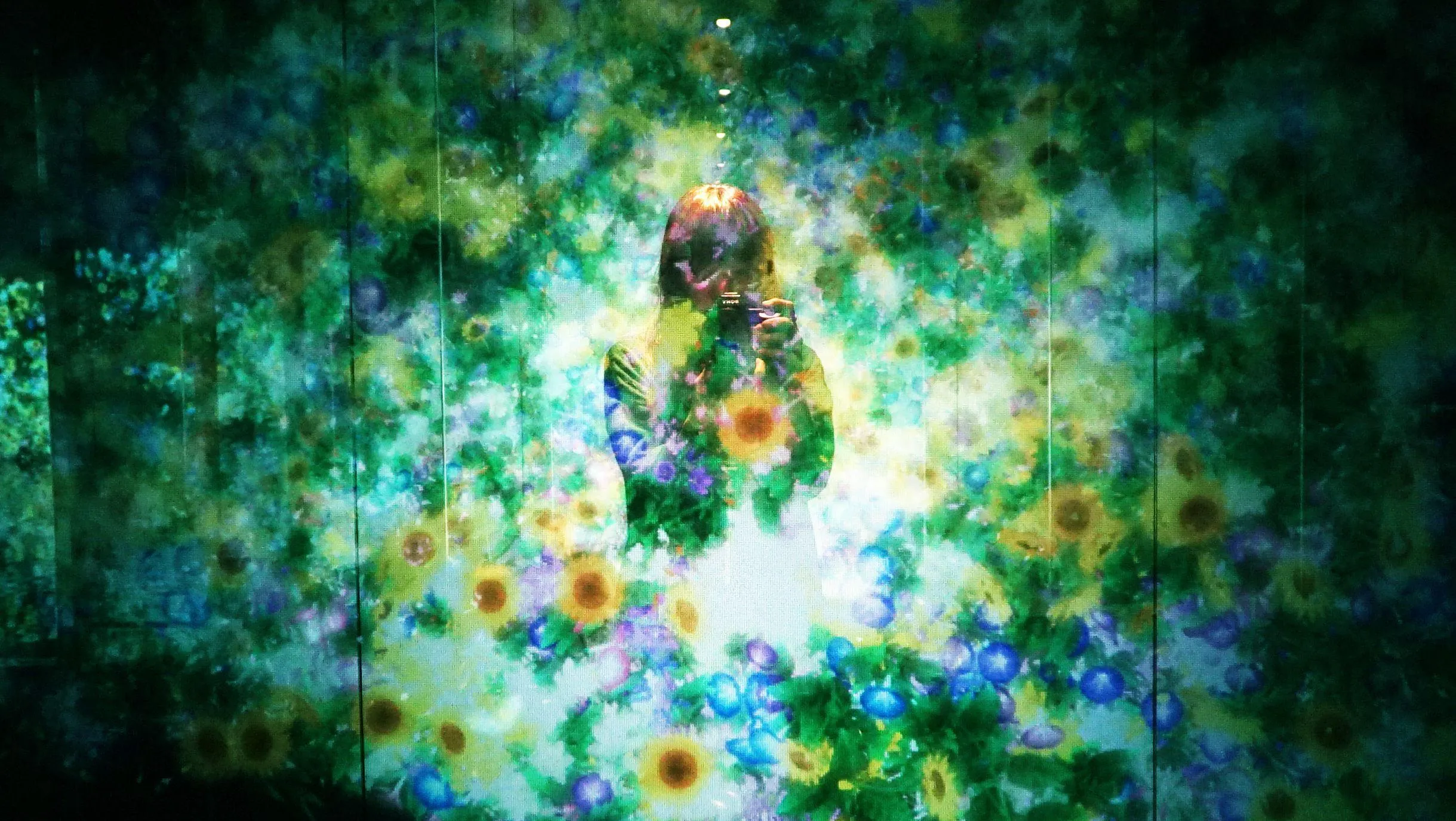
Flowers and People, Cannot be Controlled but Live Together – Kunisaki Peninsula
teamLab, 2014, Interactive Digital Installation, Endless, Sound: Hideaki Takahashi
This is an art installation consisting of a walkway and a large open space that appears to go on for infinity.
The flowers bud, grow, and blossom before their petals begin to wither, and eventually fade away. The cycle of growth and decay repeats itself in perpetuity. The flowers are interactive, depending on the proximity of the viewer to the work, or if the viewer touches the flowers, the flowers simultaneously come to life, or shed their petals wither and die all at once.
The artwork is not a pre-recorded image that is played back: it is created by a computer program that continuously renders the work in real time. The interaction between people and the installation causes continuous change in the artwork: previous visual states can never be replicated, and will never reoccur. The picture at this moment can never be seen again.
In spring in the Kunisaki Peninsula, there are many cherry blossoms in the mountains and canola blossoms at their base. This experience of nature caused teamLab to wonder how many of these flowers were planted by people and how many were native to the environment. It is a place of great serenity and contentment, but the expansive body of flowers is an ecosystem influenced by human intervention, and the boundary between the work of nature and the work of humans is unclear. Rather than nature and humans being in conflict, a healthy ecosystem is one that includes people. In the past, people understood that they could not grasp nature in its entirety, and that it is not possible to control nature. People lived more closely aligned to the rules of nature that created a comfortable natural environment. We believe that these valleys hold faint traces of this premodern relationship with nature that once existed, and we hope to explore a form of human intervention based on the premise that nature cannot be controlled.
What a Loving, and Beautiful World
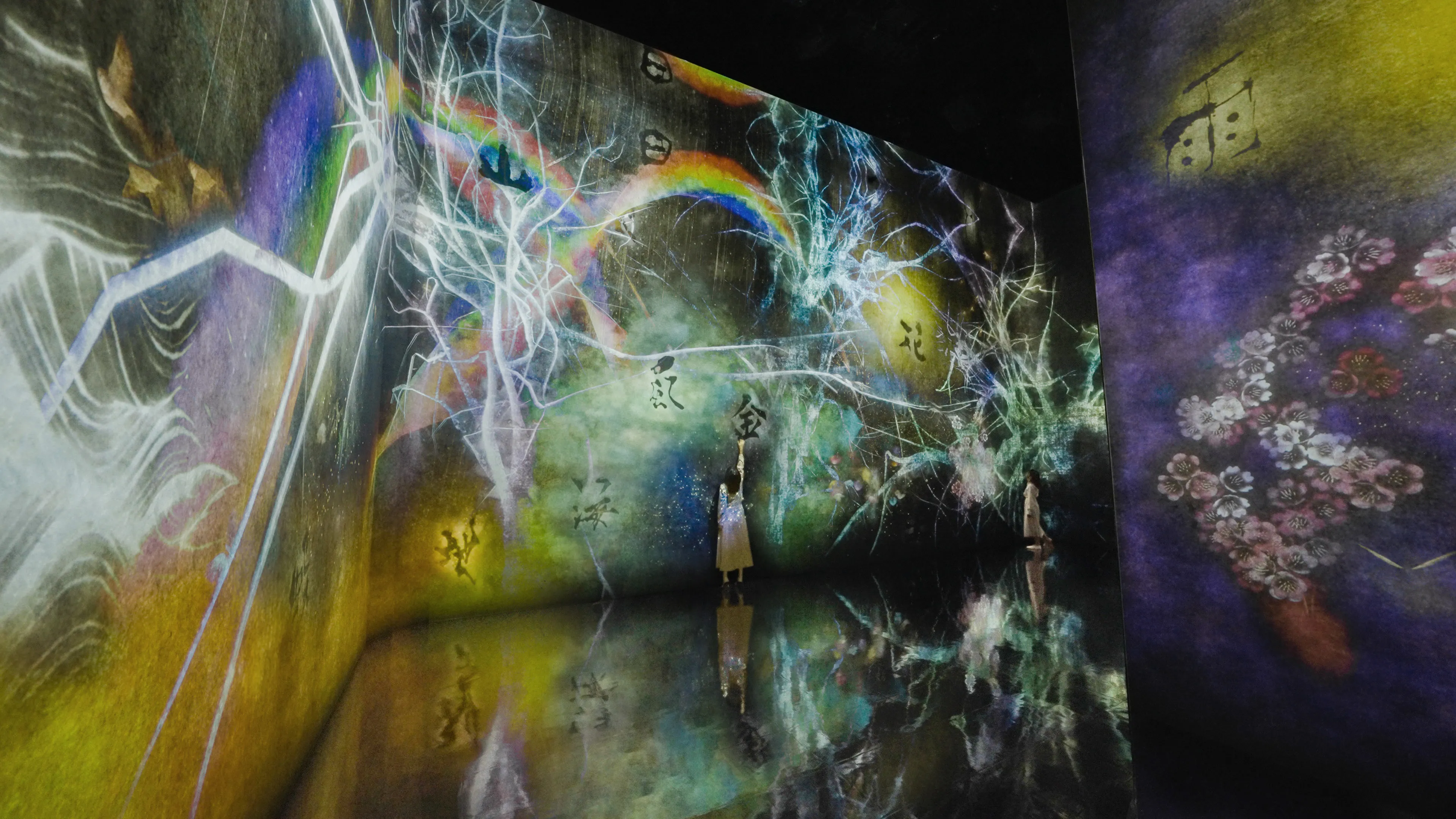
Sisyu + teamLab, 2011-, Interactive Installation, Endless, Calligraphy: Sisyu, Sound: Hideaki Takahashi
Each character has its own world. When people touch the letters, the worlds of the characters appear, and they influence each other, creating one single world. Rain, snow, and flowers are affected by the wind, birds perch on trees, and butterflies are attracted to flowers.
When other artworks touch the letters, the worlds they contain appear as well. The worlds created by people interact with the worlds created by other people and other works, creating new imagery.
The artwork seen at this moment in time can never be seen again.
At times, the artwork spreads far and wide.
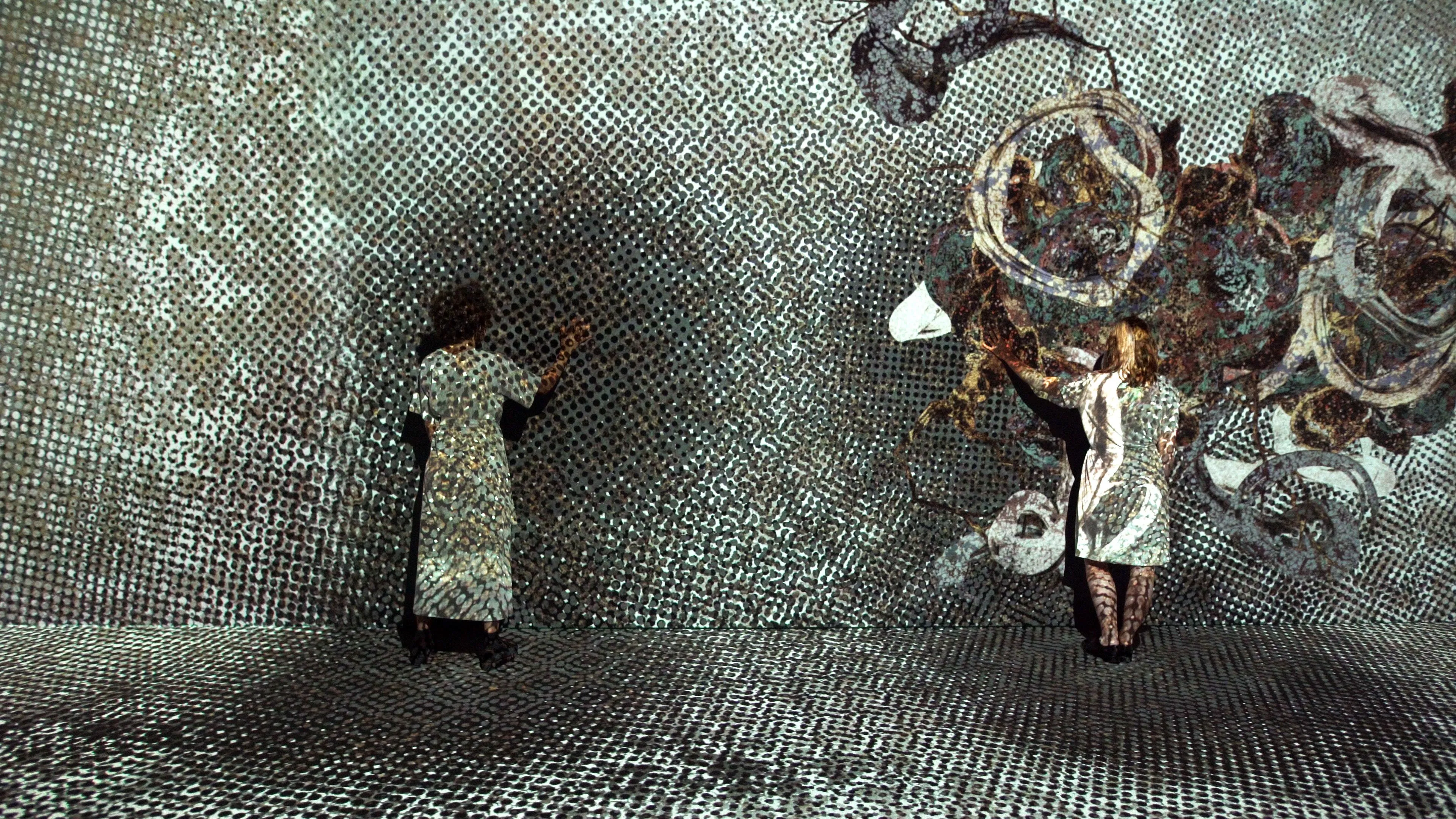
teamLab, 2018, Interactive Installation, Sound: Hideaki Takahashi
À l'arrière-plan, les fleurs de cerisiers fleurissent et se disséminent, le cycle de la vie et de la mort se répète.
Lorsque les gens entrent en contact avec l'espace, un cercle naît et grandit en rayonnant selon un certain rythme et selon un intervalle spécifique. Ce cercle naissant ne transforme que la lumière et l'obscurité du monde en arrière-plan.
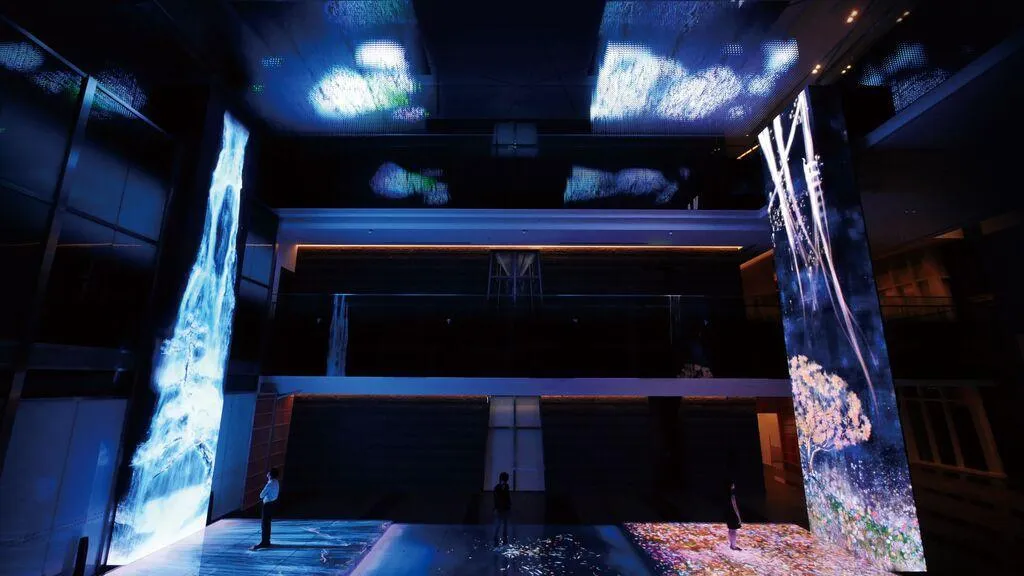
teamLab, 2014, Interactive Digital Installation + Light Sculpture, LED, Endless, H: 14700mm W: 17200mm D: 3840mm, Concept design, production and execution supervisor: DEM inc.
Rain falls from the sky; the rain creates waterfalls; the waterfalls turn into rivers, helping the flowers grow and blossom on the land. Birds gather near flowers and trees, flying into the sky where the clouds form and float away. Everything is connected in a cycle, but no events are ever repeated in exactly the same way.
Neither a prerecorded animation nor on loop, the work is rendered in real time by a computer program. It continuously changes its appearance in line with the influence of external data such as viewer behavior, the time of day, seasons, temperature, weather, and various other parameters within the CTBC Financial Park, Taipei.
Just as no natural landscape ever looks the same twice, this artwork never replicates the same state, thus creating new scenery forever.