teamLab: Everything Exists in Infinite Continuity | teamLab

メイン画像
teamLab: Everything Exists in Infinite Continuity
‎2027.2.21(Sun) - ‎2026.9.22(Tue)Smart Museum of Art, University of Chicago, Chicago
メイン画像
teamLab: Everything Exists in Infinite Continuity
‎2027.2.21(Sun) - ‎2026.9.22(Tue)Smart Museum of Art, University of Chicago, Chicago

الأعمال الفنية

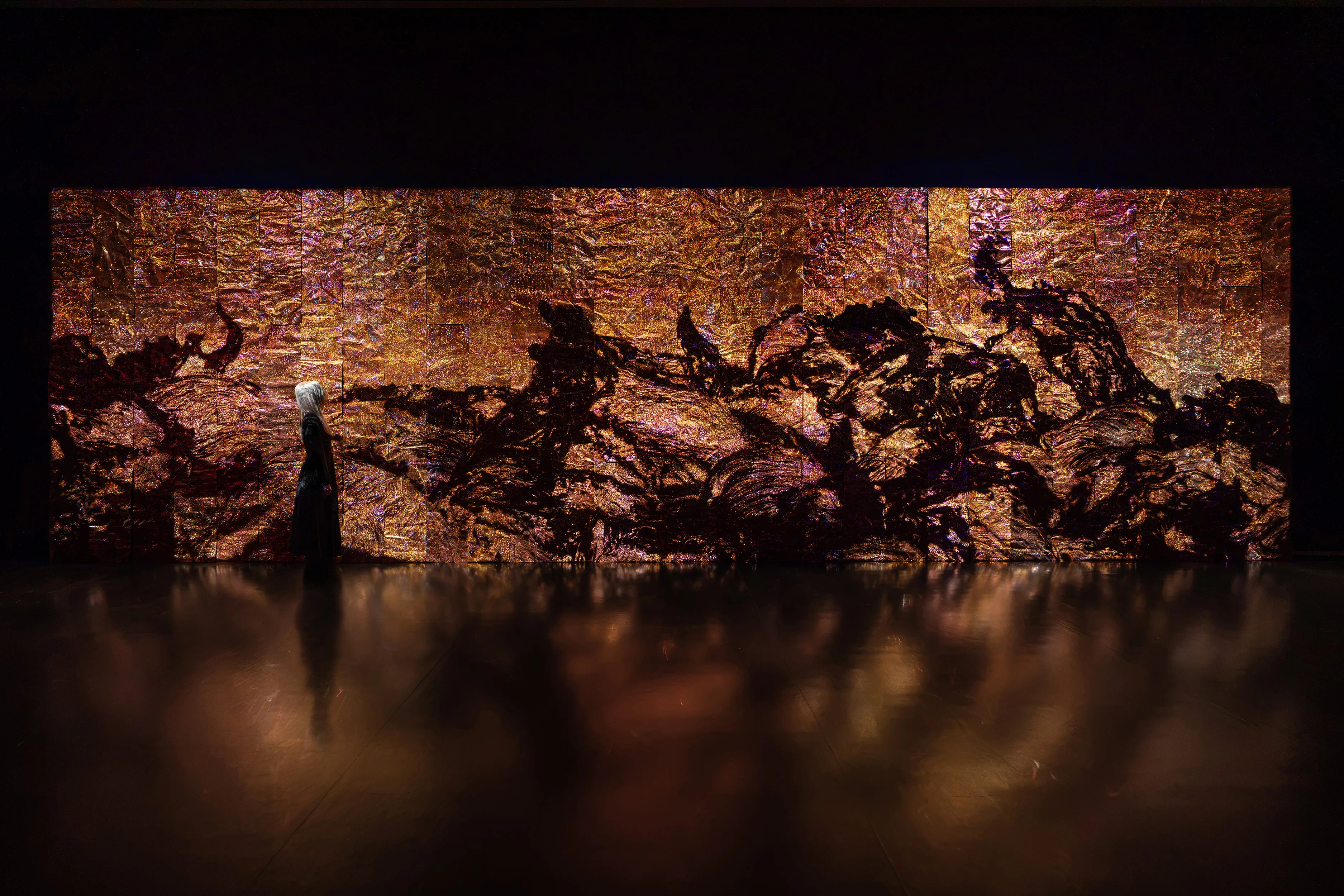
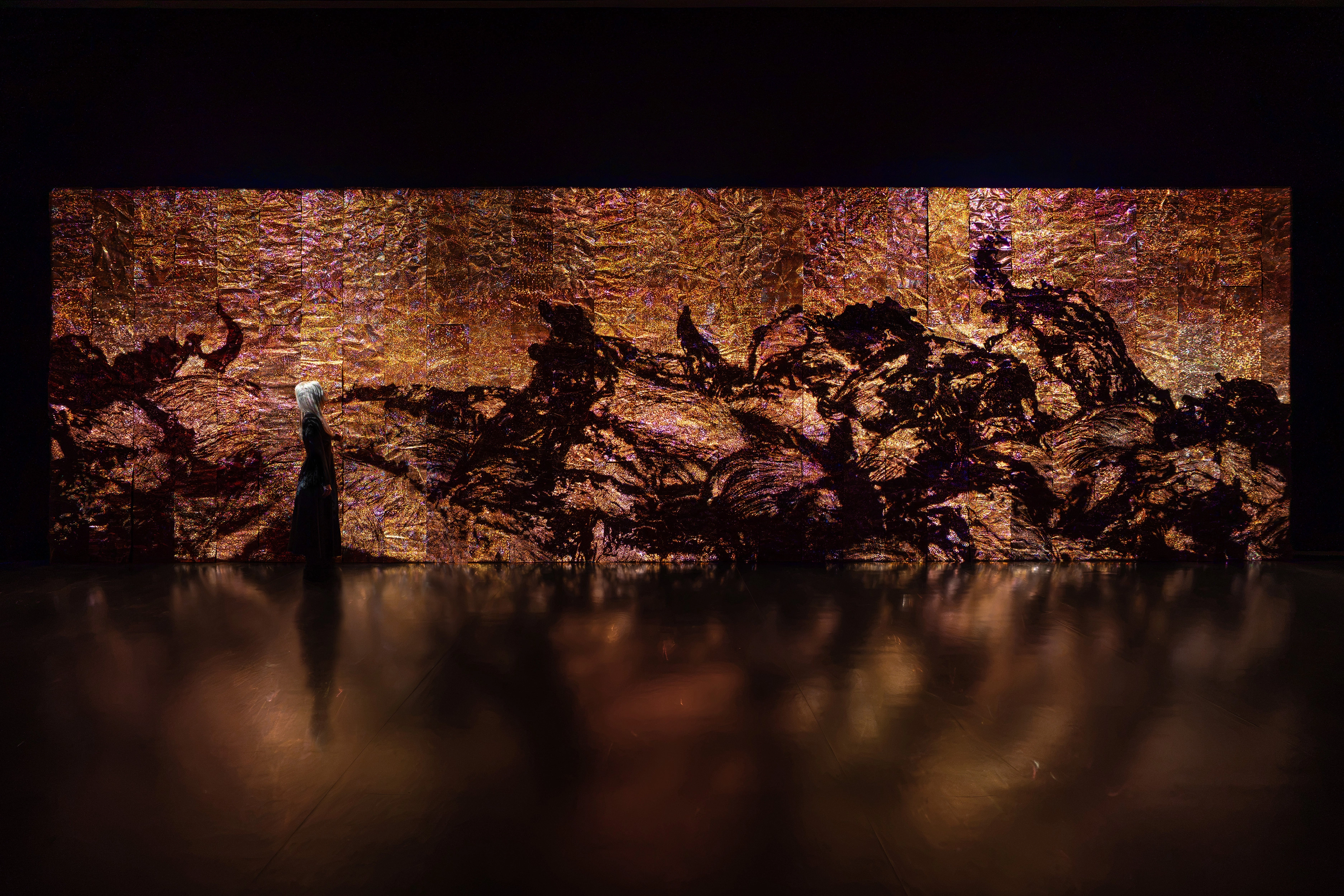
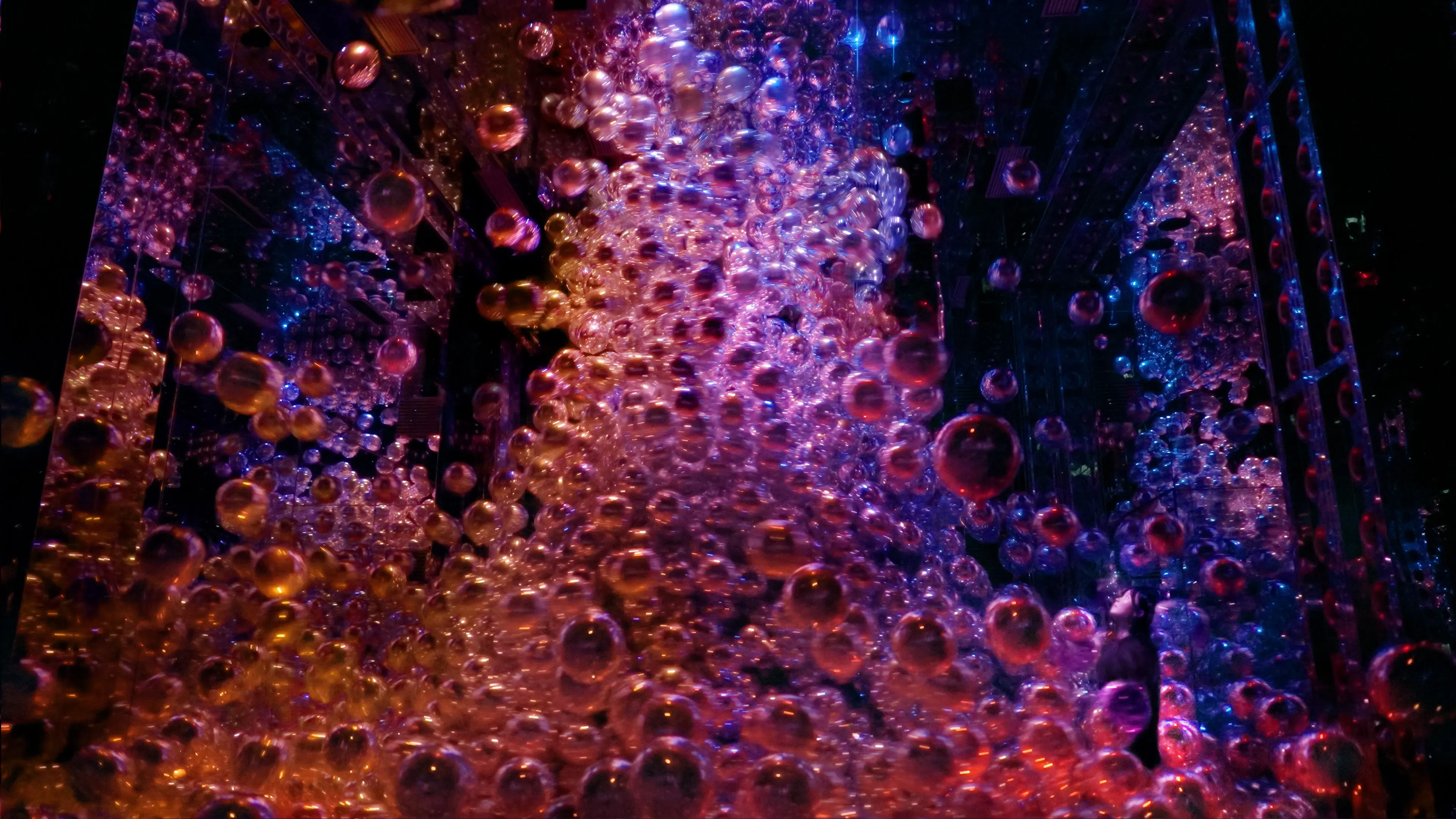
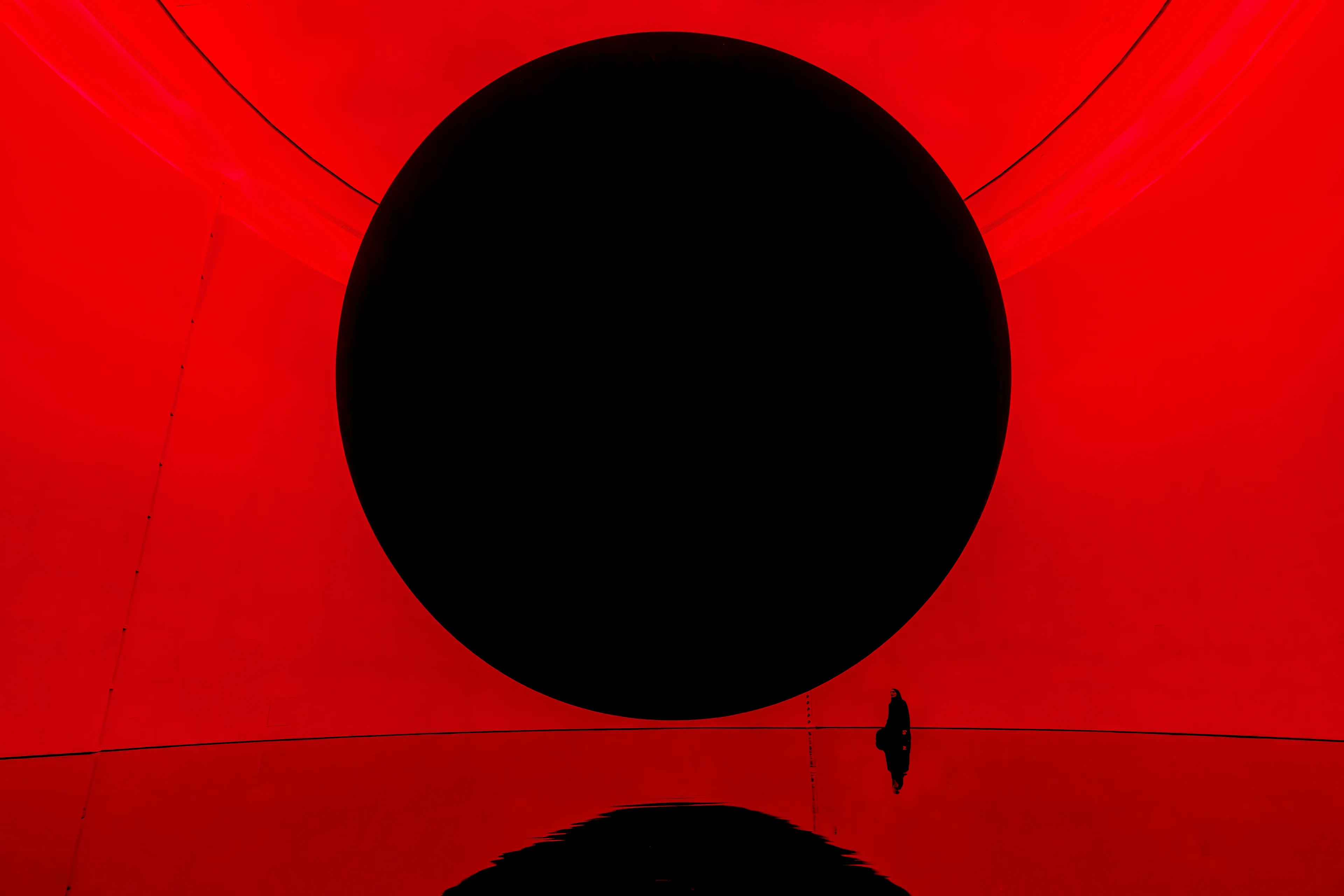
Sea of Darkness, Memory Shining from the Depths

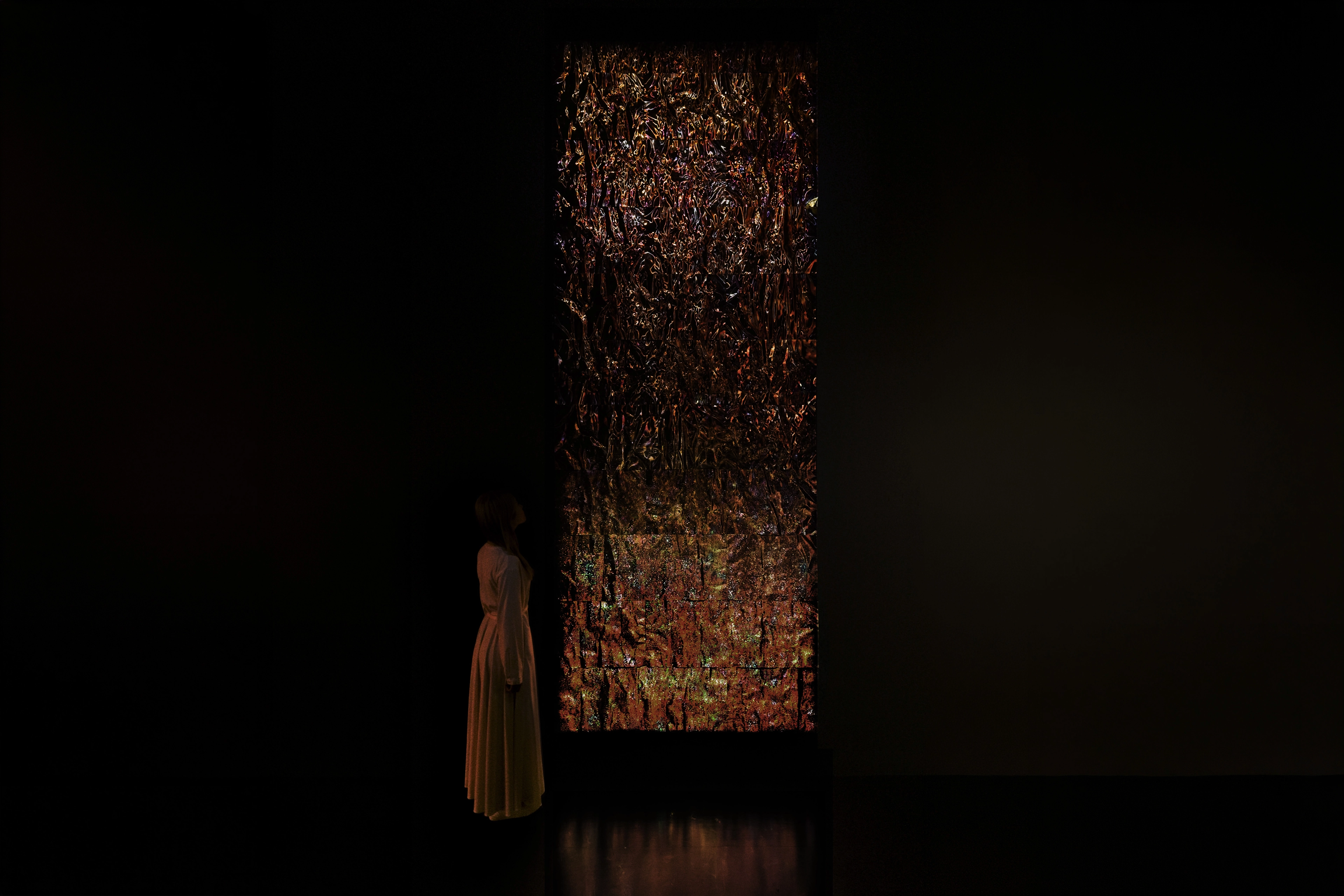
Darkness is in front, and light exists in the depths.Substance and perception become ambiguous, and physical boundaries disappear.The sea gently ebbs and flows in the eternity of time.
The black of the lines that trace the waves is darkness — that is, a state without light. However, the lines drawn by the darkness, which are void of matter or light, appear in front of the shimmering light and continue to flow.
To recognize existence does not involve the presence of objects or light.Existence is born and shaped in relation to its surroundings.
Here, the waves are drawn through Ultrasubjective Space, and thus become a pictorial space that restores bodily freedom.
On the other hand, while the pictorial world is depicted on the screen, a strong shimmering light simultaneously covers that world. This shimmering light is caused by the light itself that depicts the world of waves reflecting on the surface of the screen.The shimmering light continues to change with the passage of time, even if the viewer does not move. Furthermore, in response to the environment and the moving body of the viewer, its appearance changes, and shines from the depths of the pictorial world. While appearing across the entire screen, the shimmering light is an extremely personal light, existing only within the viewer's own perception.
The space created by this shimmering light is not an illusion of depth depicted on a flat painting. It is a space that emerges at that moment through the movement of the viewer's body and the light that depicts the world of waves.The only physical material is copper. The pictorial space created by the group of shimmering points is generated within the relationship among the physical material, time, light, the environment, and the viewer's body, and emerges within the viewer's perception. While appearing on the screen, the pictorial space is continuous with the real space where the body exists, and expands into the depths of the pictorial space as a bodily space of light.
The bodily pictorial space drawn through Ultrasubjective Space and the bodily space of light created by the shimmering light overlap. There, the waves drawn by darkness, the copper surface, the shimmering light, the environment, and the viewer's body and perception interact with each other, and a boundless bodily pictorial world of light emerges, continuous with the space where the body exists.
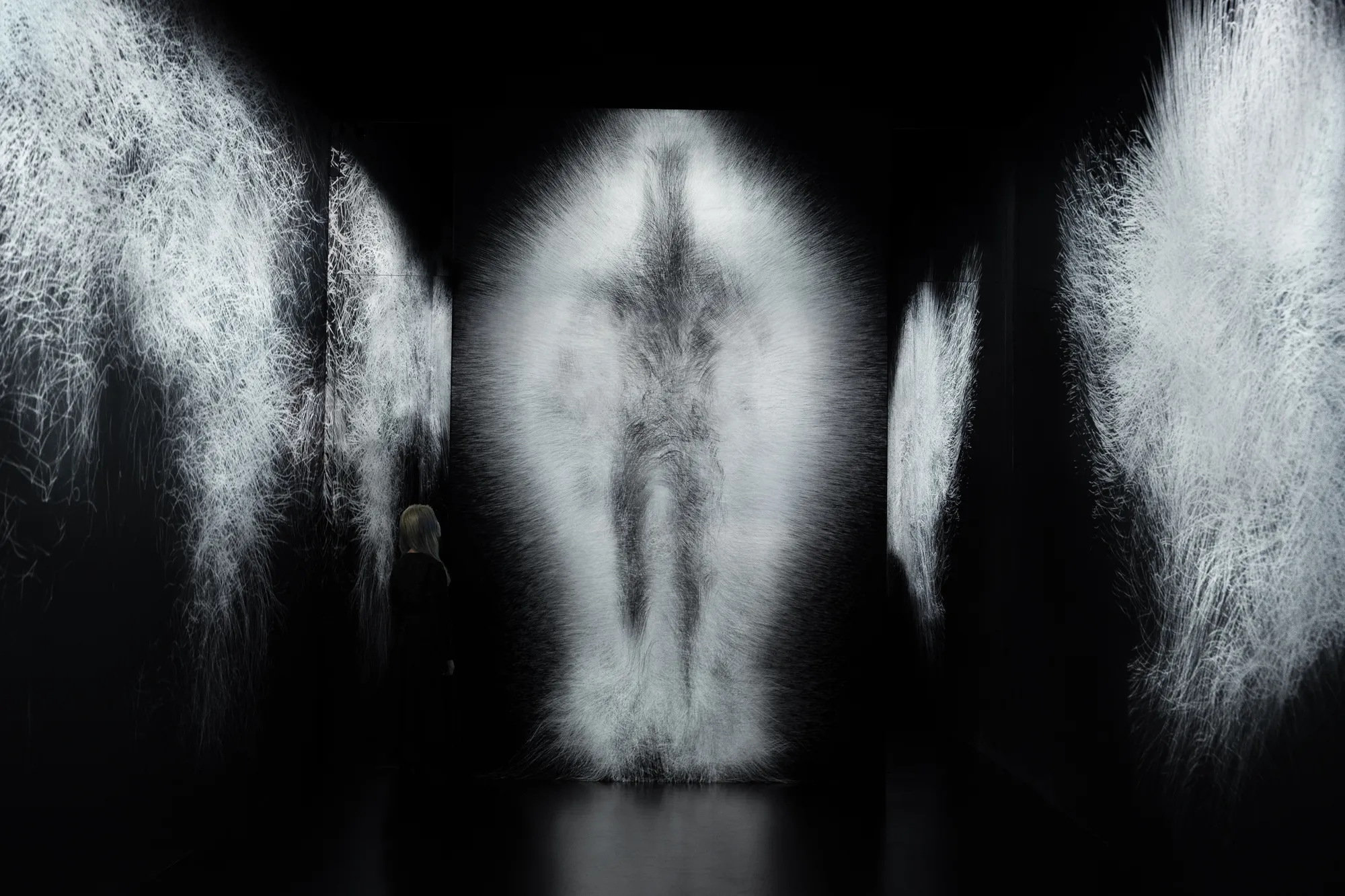
Dissipative Figures - Human

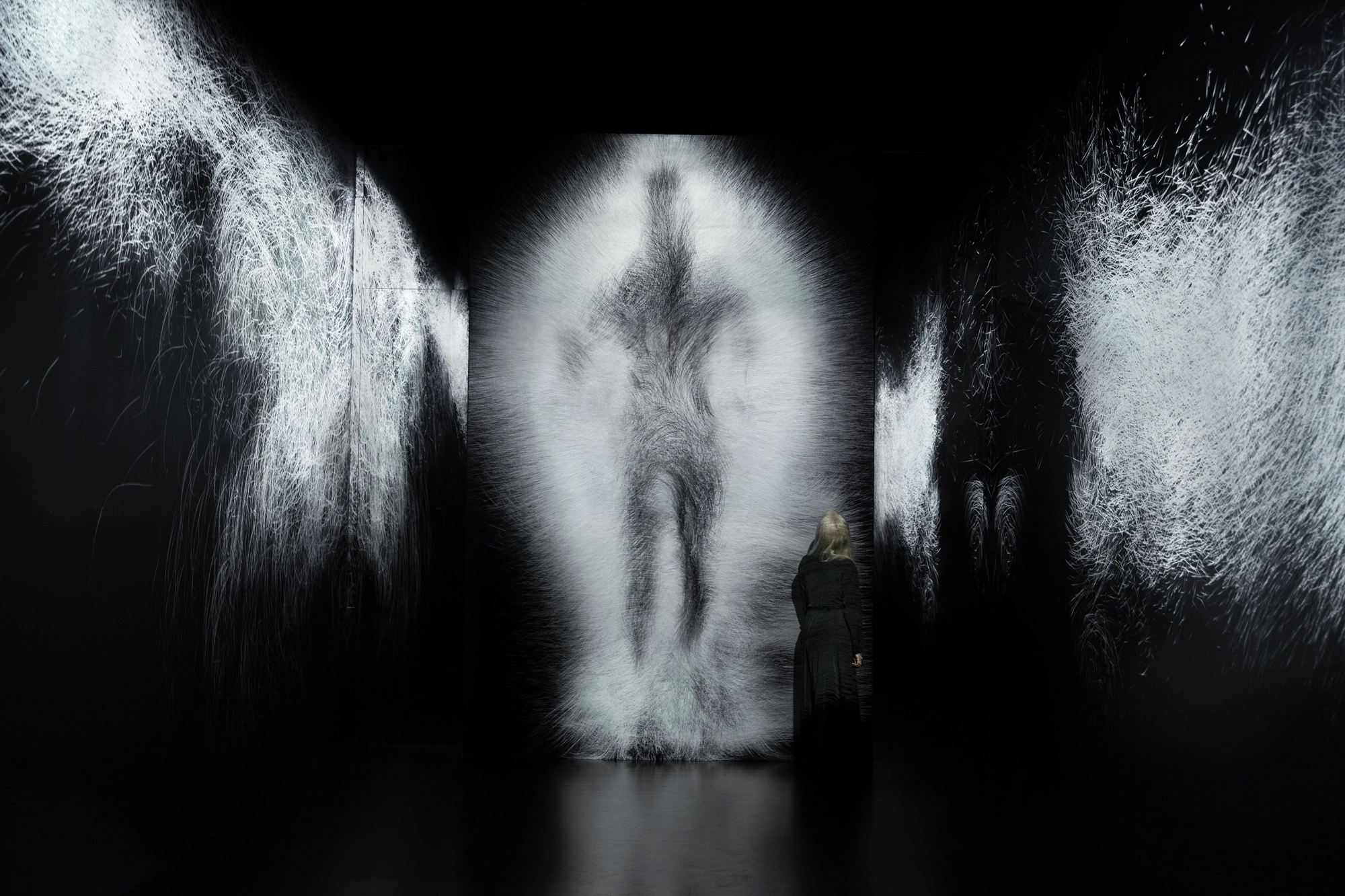
A person is not depicted by the contours of the body.
When a person moves, the surrounding environment, such as the air, also moves. As long as people live, they continuously dissipate energy into the world and keep moving the surrounding environment. This artwork does not depict the material surface boundary of the person itself, but depicts the existence of a person through the energy that people continue to give to the world and the resulting movement of the environment.
The contours of life’s existence are not the surface boundary of the body, but something ambiguous that includes the environment that is continuous with the body. People continuously breathe, move, emit heat, vibrate the air, and dissipate energy into their surroundings. Being consists of the body and the environment that is continuous with it.
When viewers pass in front of the artwork, the viewers themselves also move the surrounding environment. This movement occurs in the same space as the space where the depicted person is. The movement of the depicted person and the movement of the viewer blend together within the same flow of energy, and the lines that depict the person are disrupted and change due to the movement of the viewer.
A portrait is not an image for looking at the depicted person from the outside, but becomes a continuous field where the depicted person and the viewer exist within the same environment.
Objects like stones continue to exist even if placed in a closed box, sealed off from the outside world. But life cannot maintain its existence in such a closed box. Life consumes external matter and energy as food and discharges it, maintaining its structure as the energy dissipates.
Life is like a vortex created in the ocean, an existence within a flow, and the boundaries of its existence are ambiguous, an existence within an infinite continuity.
To be alive is to constantly dissipate energy into the world and be continuous with the world, an open existence.

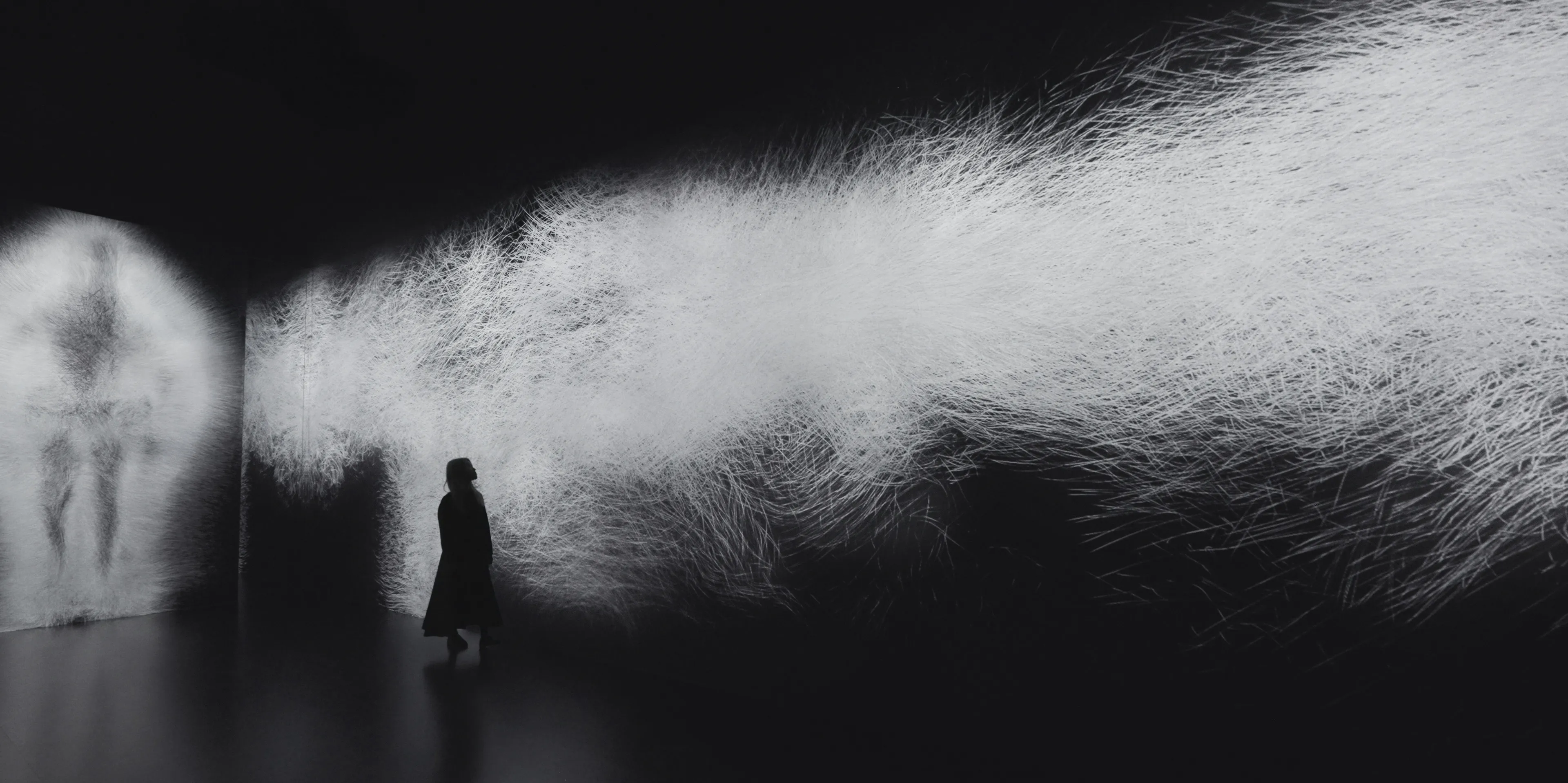
Dissipative Figures - Murmuration

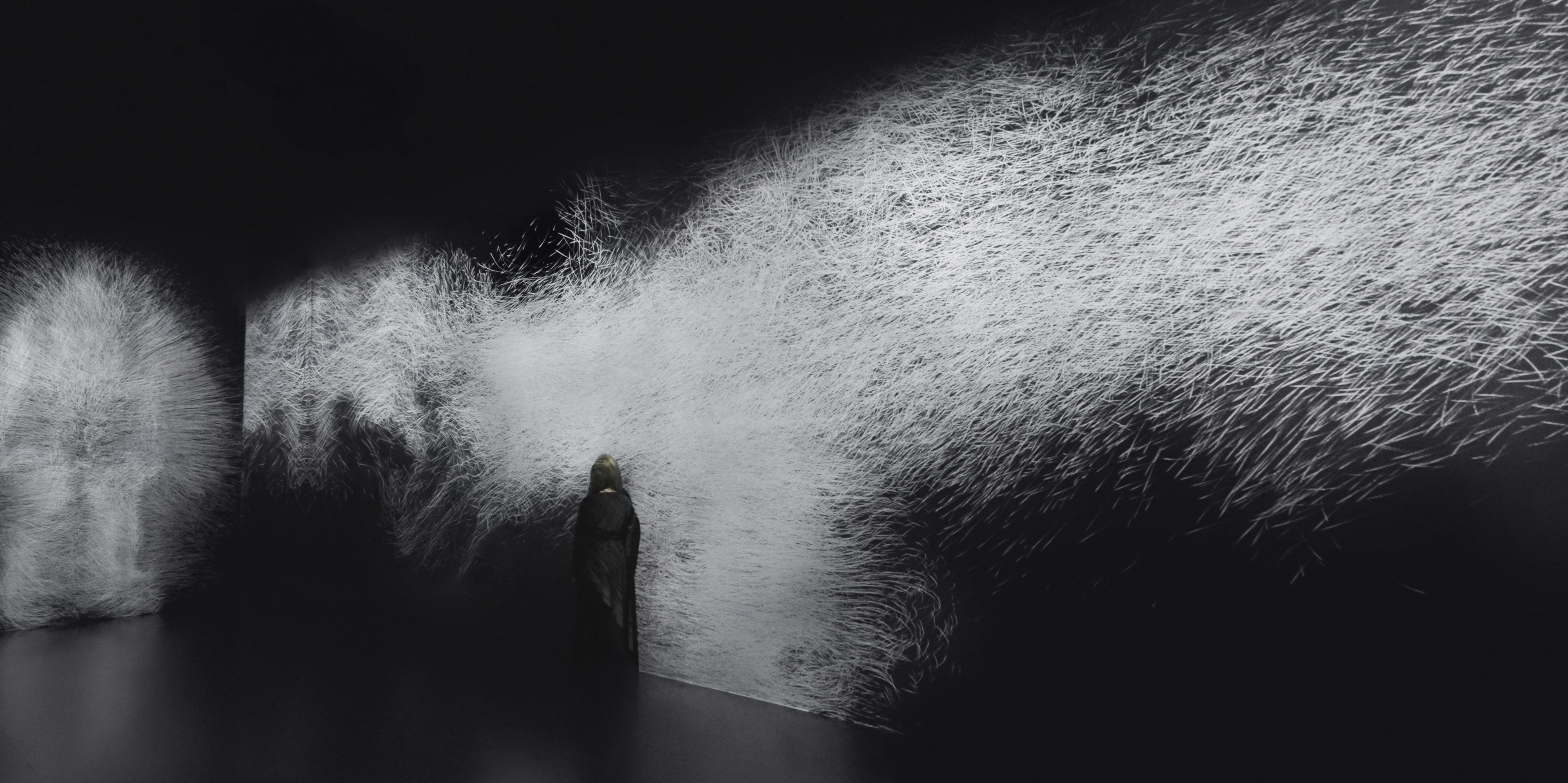
A murmuration is not depicted by the contours of individual birds.
When birds fly, the surrounding environment, such as the air, also moves due to the flapping of their wings and the movement of their bodies. As long as birds live, they continuously dissipate energy into the world and keep moving the surrounding environment. This artwork does not depict the material surface boundary of the bird itself, but depicts the existence of the murmuration through the energy that the murmuration continues to give to the world and the resulting movement of the environment.
A murmuration is not an accumulation of individual birds, but a giant, organic phenomenon of collective flight. The birds rise up in the space like a single large entity, while mutually changing their distance, direction, and speed from each other. The contours of its existence are not the surface boundary of individual birds' bodies. It is something ambiguous that includes the bodies of the birds, the flow of air that is continuous with them, and the energy dissipated into the surroundings.
When viewers pass in front of the artwork, the viewers themselves also move the surrounding environment. This movement occurs in the same space as the space where the depicted murmuration is. The movement of the murmuration and the movement of the viewer blend together within the same flow of energy, and the lines that depict the murmuration are disrupted and change due to the movement of the viewer.
This painting is not an image for looking at the murmuration from the outside. It becomes a continuous field where the depicted murmuration and the viewer exist within the same environment. The murmuration is not a closed existence on the other side of the screen, but changes its appearance while blending with the environment moved by the viewer's body.
Objects like stones continue to exist even if placed in a closed box, sealed off from the outside world. But life cannot maintain its existence in such a closed box. Life consumes external matter and energy as food and discharges it, maintaining its structure as the energy dissipates.
Life is like a vortex created in the ocean, an existence within a flow, and the boundaries of its existence are ambiguous, an existence within an infinite continuity.
A murmuration is also an existence that emerges within a flow. Through the continuity of individual birds' bodies, the movement of air, the dissipated energy, the viewer's body, and the surrounding environment, a giant phenomenon of a murmuration is born.
To be alive is to constantly dissipate energy into the world and to be an open existence, continuous with the world.

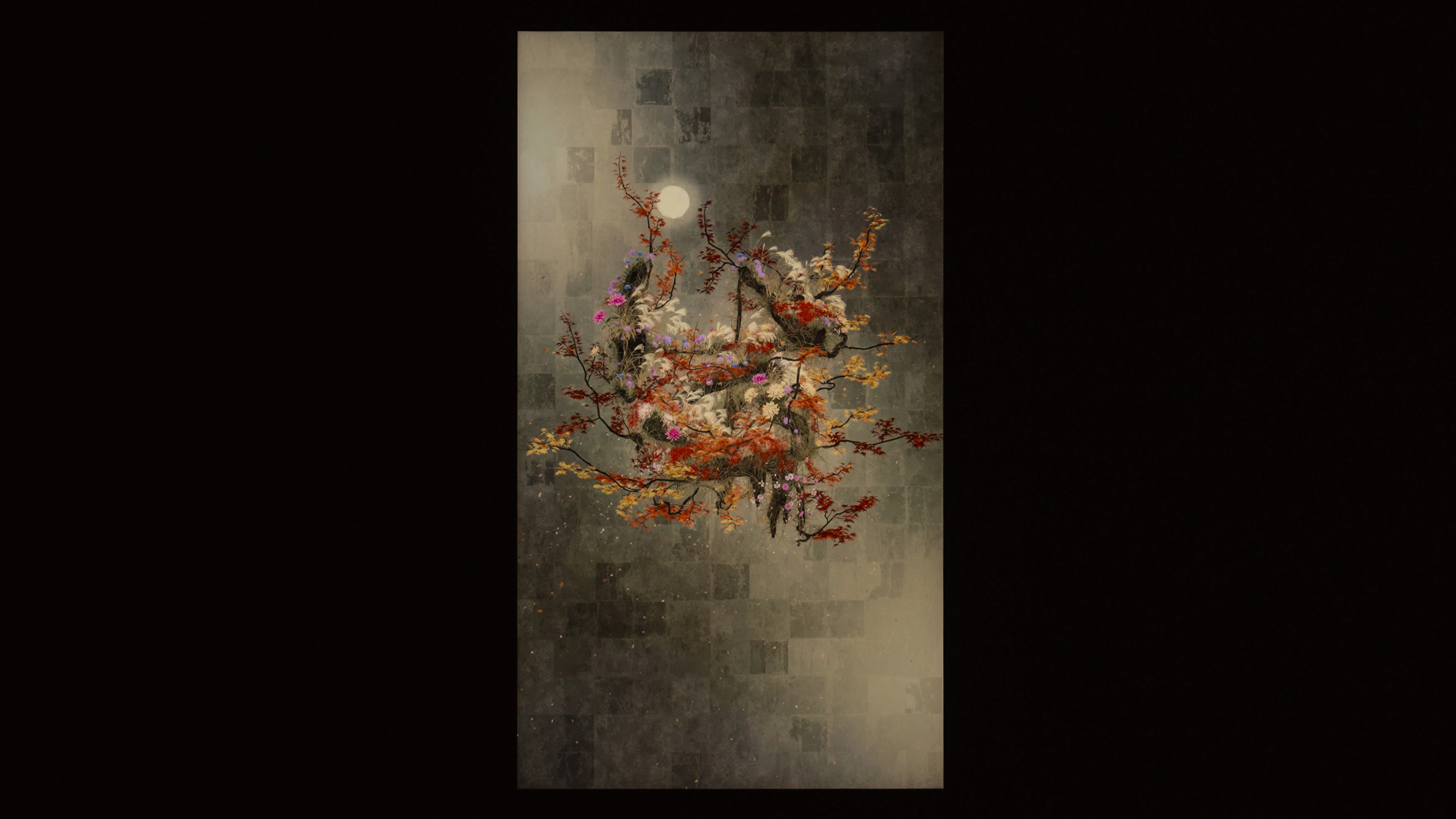
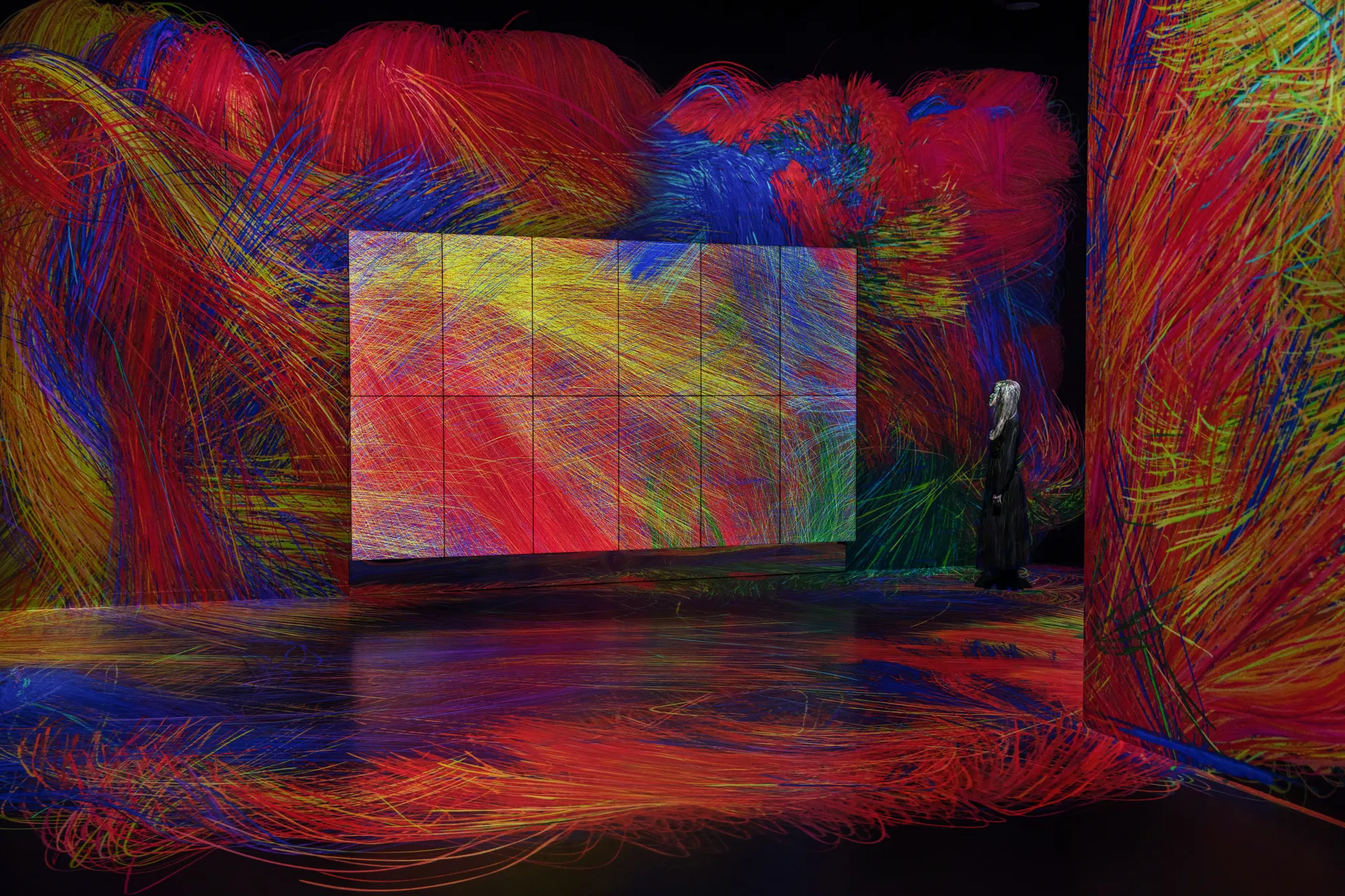
Order in Chaos

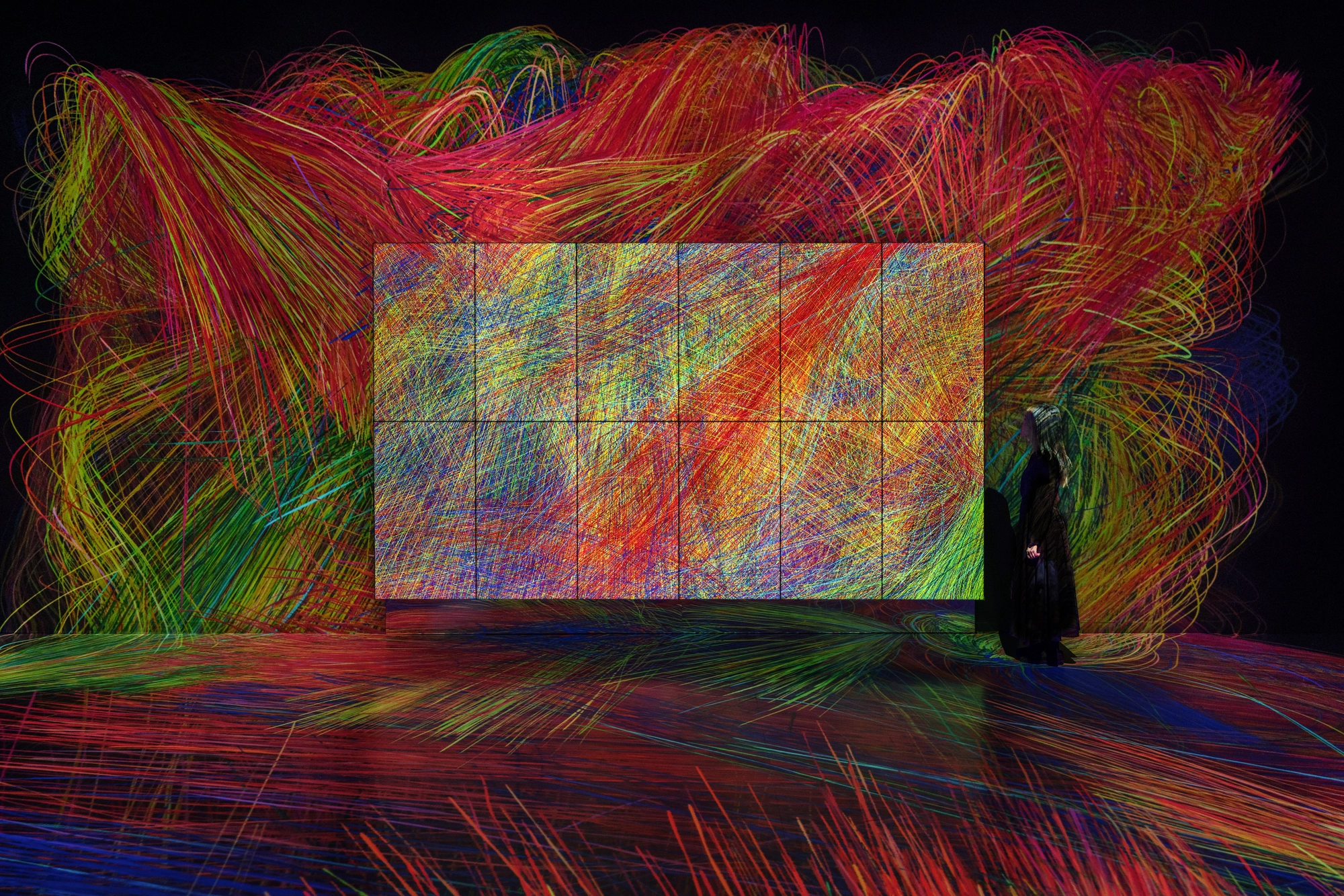
The strokes of color in this artwork do not have an overall focus; there is no guidance and no external influence. Through simple, localized interactions between the strokes themselves, and between the strokes and people, spontaneous order continuously emerges on its own, even as everything moves toward disorder.
Even if individual strokes are distant in space and time, when order is born, the individual elements transcend spatiotemporal discreteness and variability, appearing as a single entity. Despite significant changes in shape or size on the surface, or even if the elements are replaced, this spatiotemporal existence is maintained. Existence is not an accumulation of materials, but the order itself.
Existence is a part of the sea of disorder. It is eventually swallowed up by the disorder, and yet it continues to re-emerge. Order and disorder, existence and the whole, continuously flow into one another without boundaries, as they rise and fall, collide and merge.
This artwork is not an illusion that reveals a space on the other side of the screen. Within the actual space, the strokes continue to move across its surface. Walls and floors do not act as a boundary surface separating the viewer and the space of the artwork, but are the very places where the artwork space itself comes into existence.
The space of the artwork exists within the same coordinate system as the space where the viewer's bodies are. The viewer does not look at the screen from a single fixed point. Moving their body and shifting their viewpoint, they experience the interior of this spatiotemporal existence where order and disorder are born, collapse, and are born again.
This artwork is an attempt to expand painting from a completed image, or a perspective illusion of space, into a spatiotemporal pictorial space that is continuous with the real space, and that self-organizes from localized interactions.

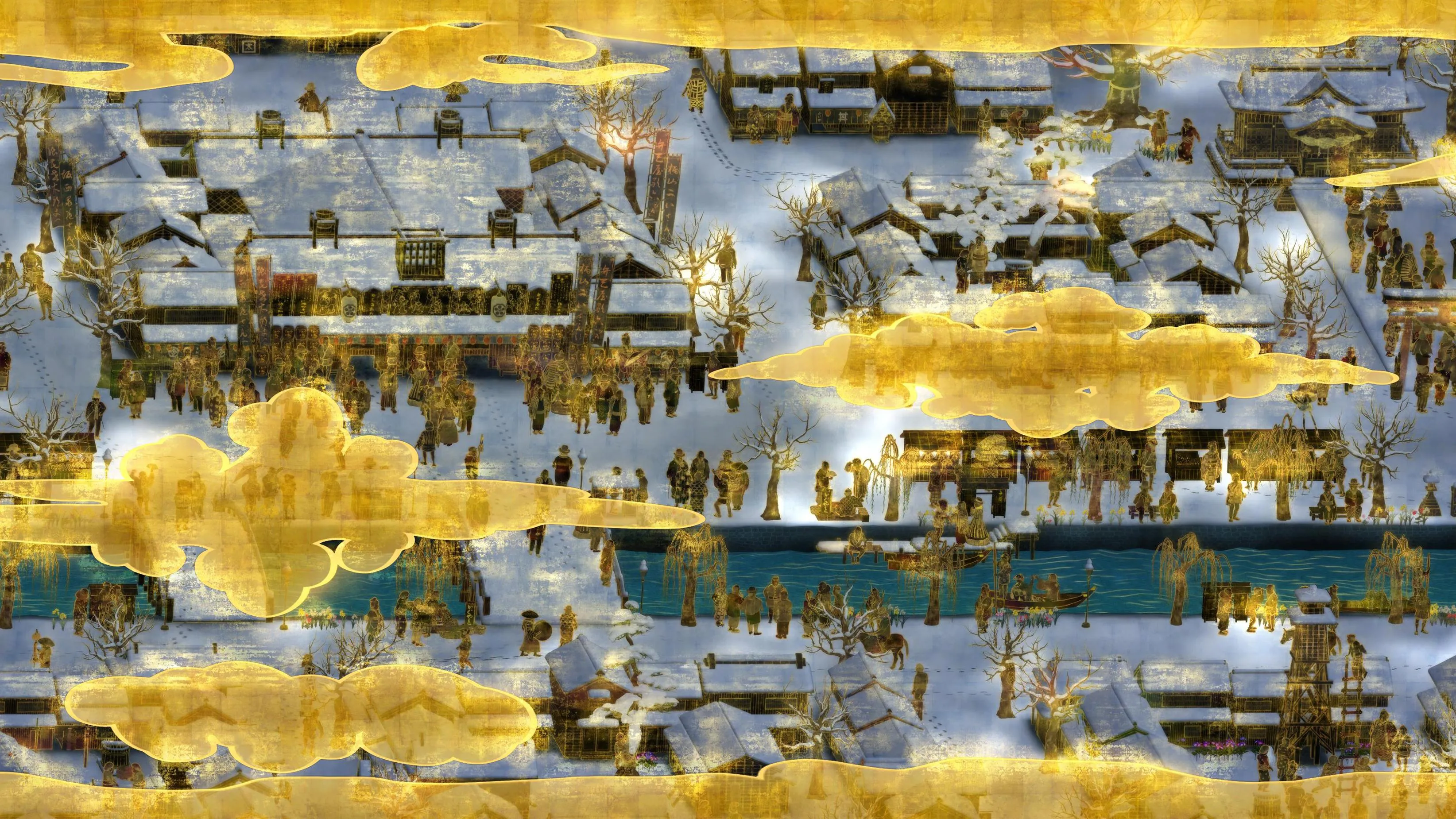
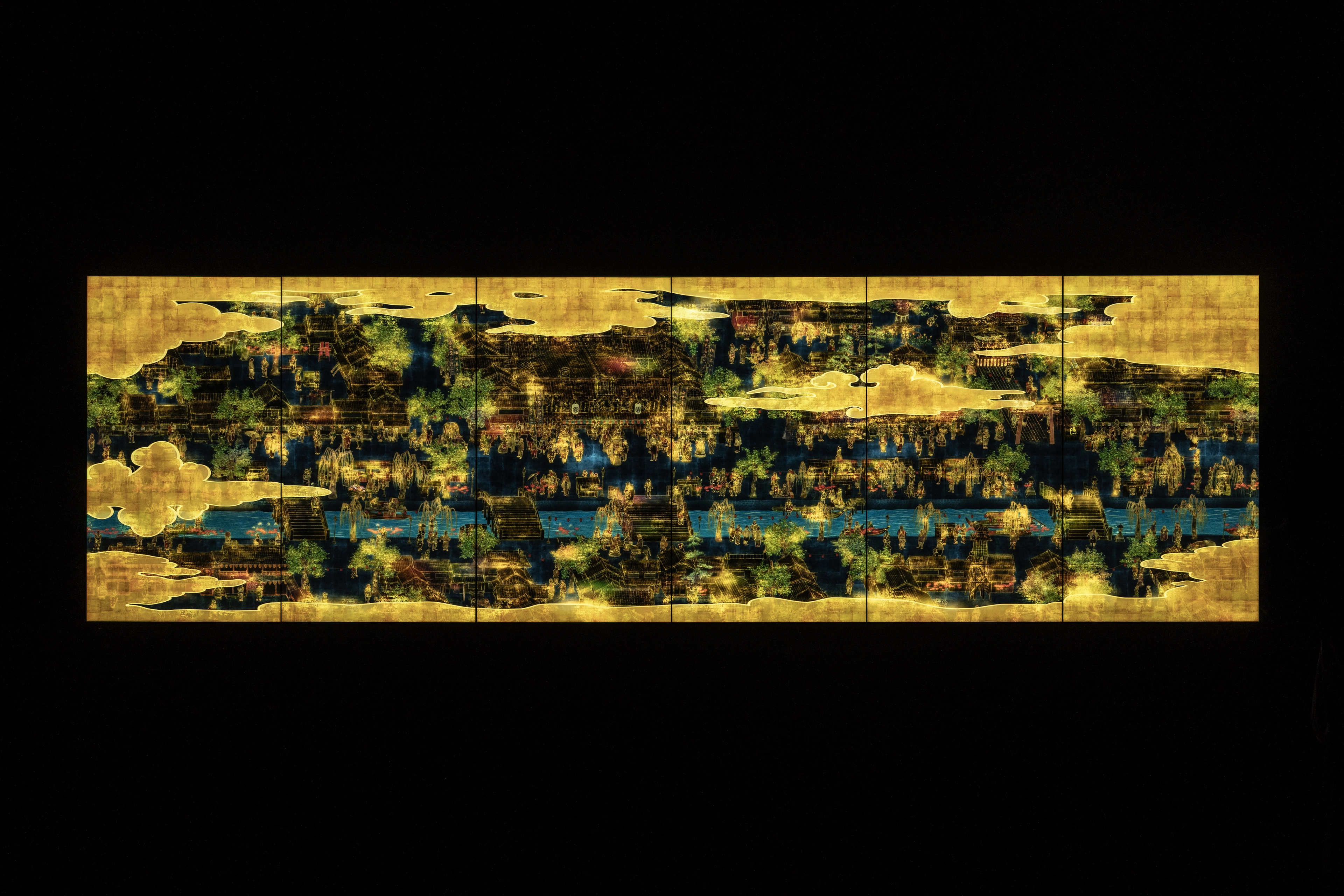
The World of Irreversible Change

This work is both somewhere in time and here and now.
The world of the artwork exists within the same flow of time as the real world. Morning arrives in the artwork with the sunrise in the real world, and when the sun sets, evening begins. If it rains in the real world of the work’s location, it rains in the world of the artwork, and the flora changes every day with each passing season.
The people’s lives also change continuously depending on the time of day and weather of the real world. Festivals and events are held with the seasons, and as various stories are added day by day, the lives of people continue.
The actions of viewers influence the world of the artwork. The people in the artwork respond when a viewer touches them. If the interaction is limited, however, they eventually return to their daily lives. But if a viewer continues to touch people in the artwork, fights break out amongst those who are near to each other. The fighting escalates into deaths, eventually spreading throughout the city, which becomes engulfed in flames. The flames last for over a year, and as the city burns to the ground, the people in the artwork eventually die out.
Once the world begins to burn, the world from before can never be seen again. The actions of viewers do not just cause a temporary reaction; it becomes the history of the world of the artwork, and continues to remain as an irreversible result. The viewers themselves are also those who cause this outcome.
In the ruined city where not a single person remains, the sun rises and sets with the time of the real world. As time passes, after a few months, new flora begin to grow in the burnt ruins of the city. Flowers and plants grow, bloom, and scatter repeatedly, changing daily within the real passage of time. In spring, the flowers and plants grow deeply, flowers bloom in profusion, and birds sing. As the seasonal changes of the flora repeats itself, the world continues.
Even if human activity ends, time does not stop. The seasons turn, the flora are born, and the world continues to change.
The viewers, as the cause of history, continue to live with that outcome.

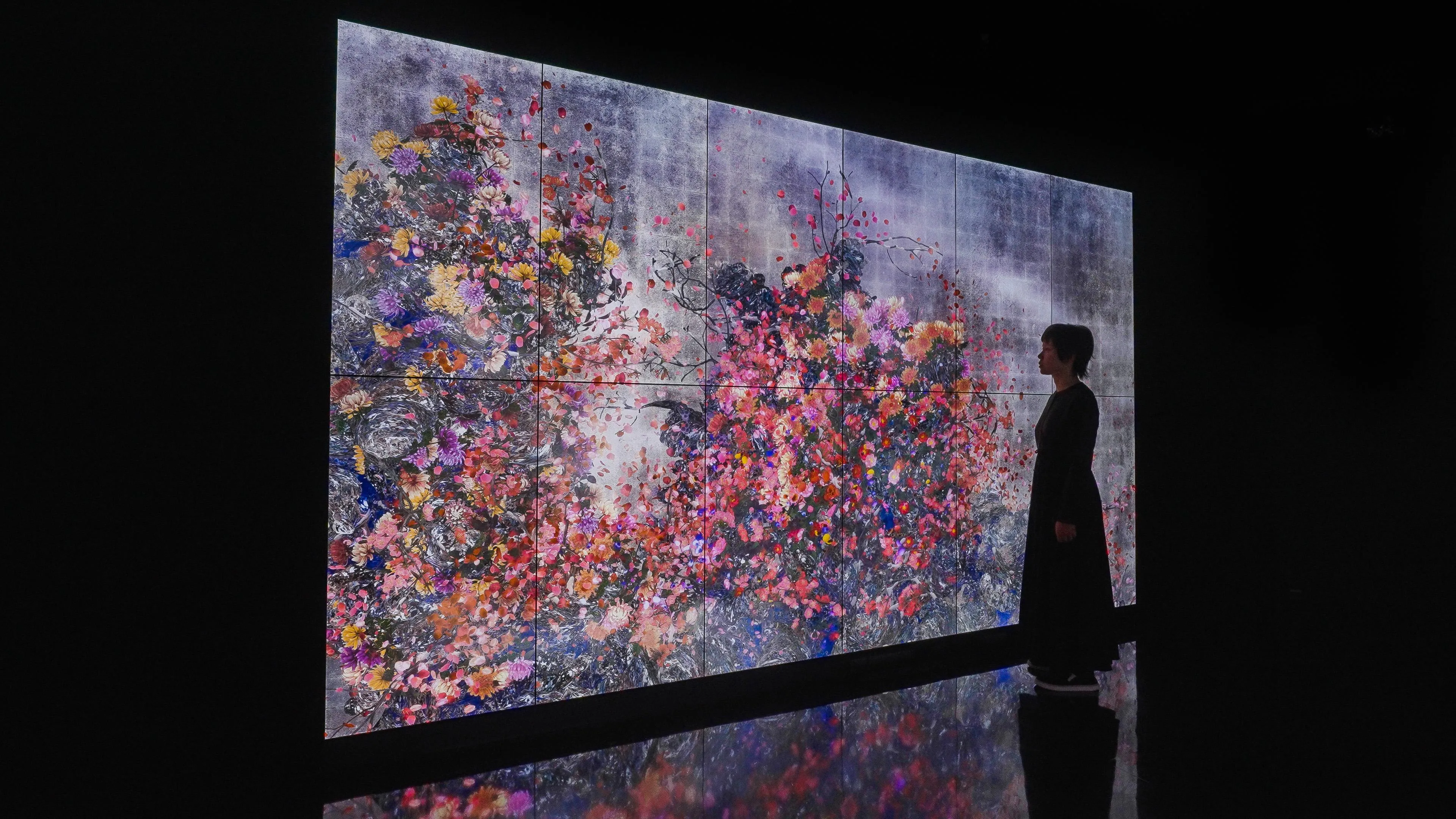
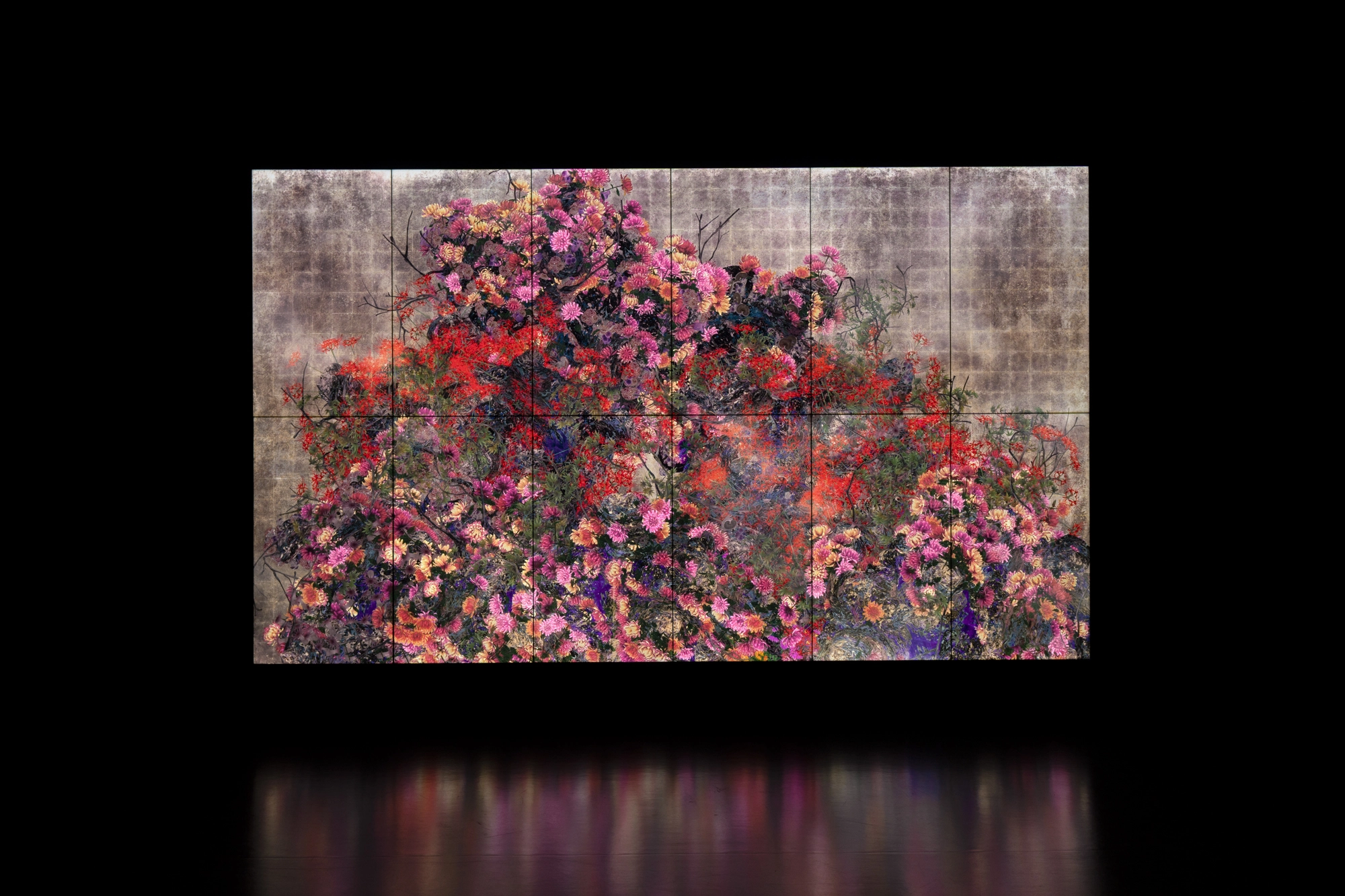
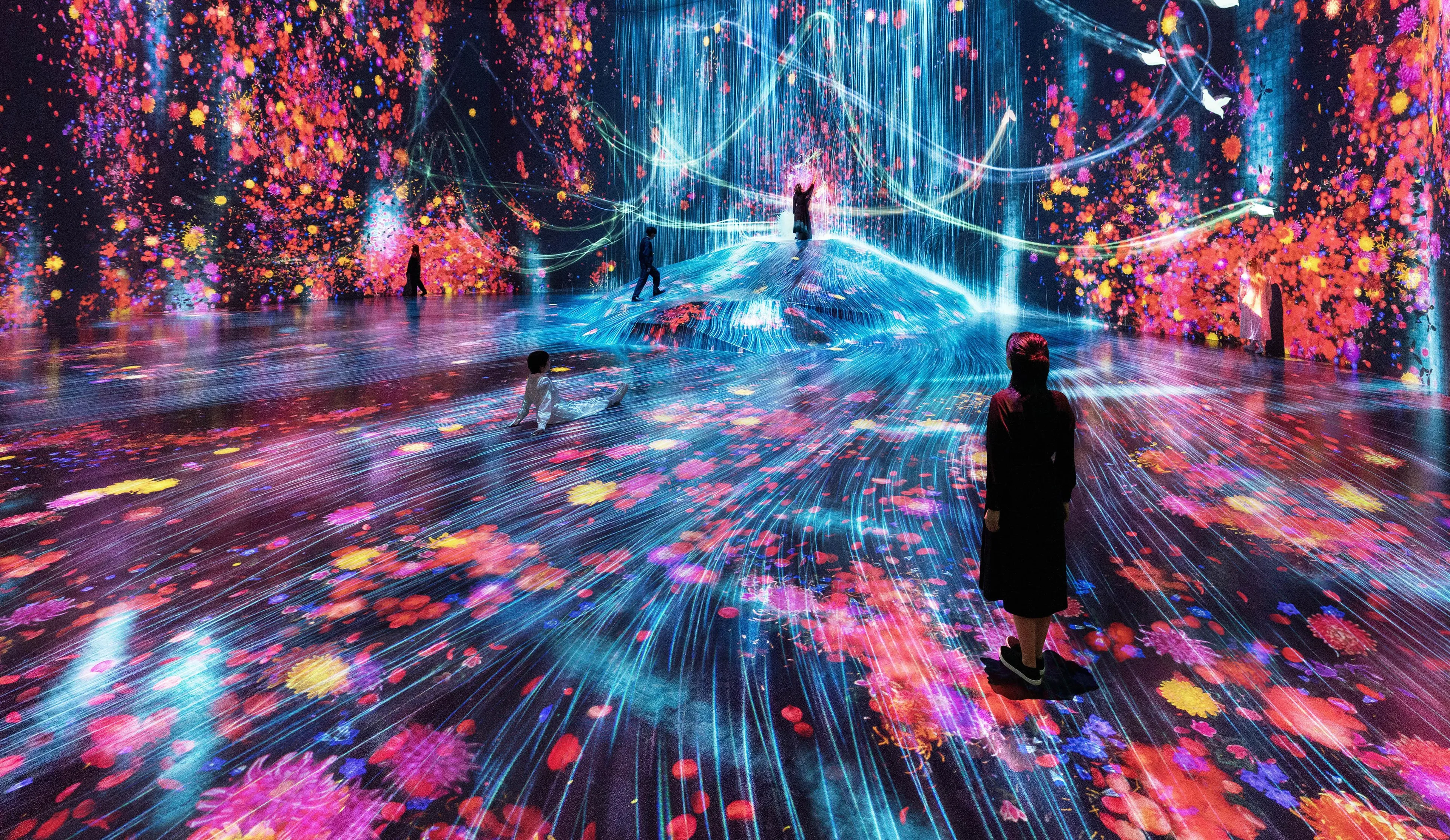
Continuous Life and Death at the Now of Eternity II

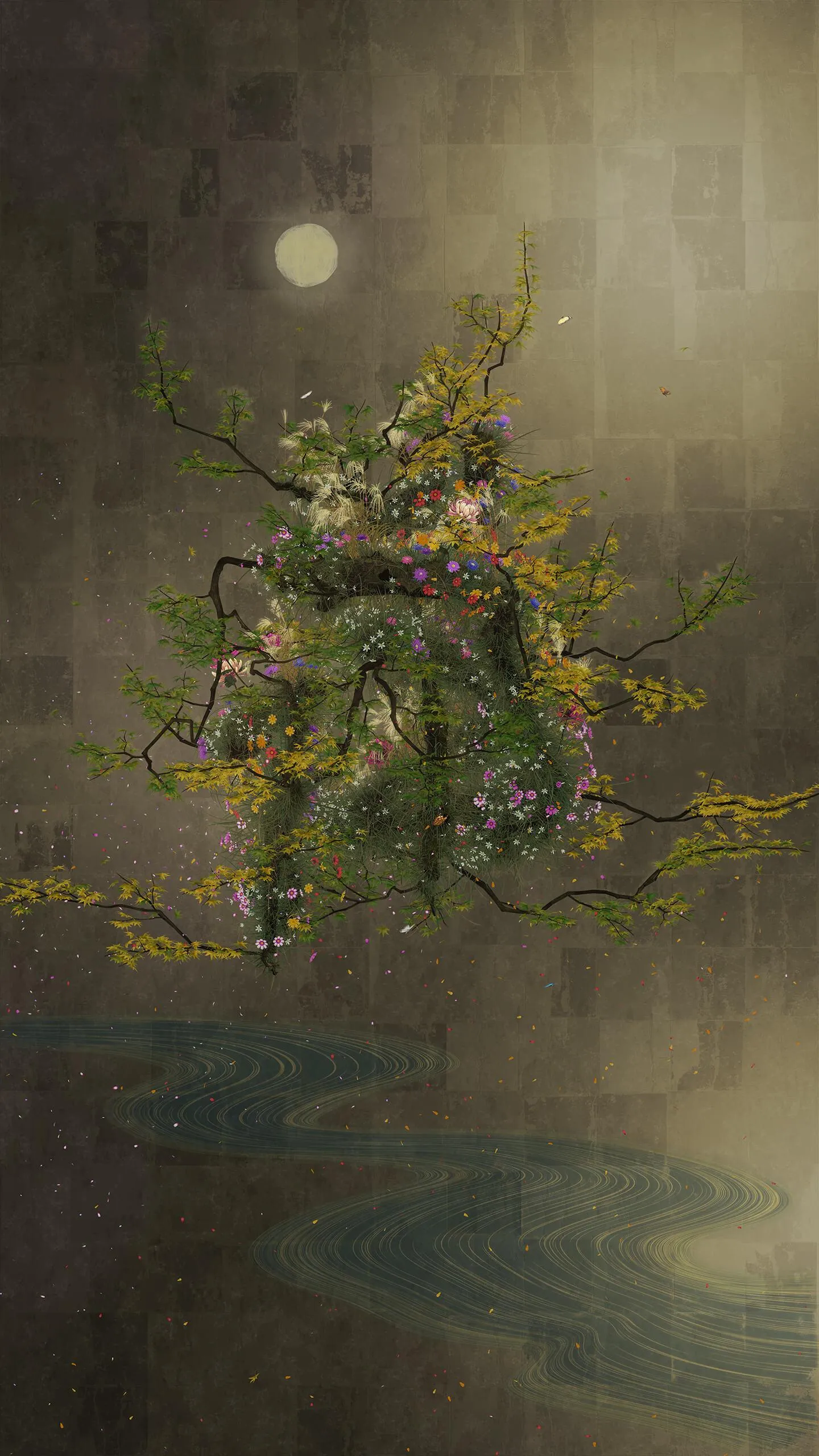
The eternally continuous life and death of flowers connects to the eternal now.
The world of the artwork is in the same flow of time in which we live. It grows brighter with the sunrise of this location and darker with the sunset. And, in accordance with the changing of the seasons, the blooming flowers slowly change.
The real time in which the viewer exists and the time in which the flowers change as they go through cycles of life and death are connected to this place and the world of the artwork, continuing and overlapping without being separated.
This pictorial world drawn through Ultrasubjective Space does not split the world of the artwork and the space the viewer is in, with the screen acting as a boundary. The world of the artwork is continuously connected to the space in which the viewer’s body exists, and the viewer, while retaining free bodily movement, walks inside this space where different times intersect in the same place.
The artwork continues to be drawn in real time, and continuously changes eternally, without the previous state being replicated as a whole. The picture at this moment can never be seen again.
The repeated life and death of the flowers in front of our eyes will continue into the future, while remaining connected to the now of this location. When we feel that continuity within the eternal now, we realize that life and death has continued from the distant past to the present, and that our existence stands upon that continuity.

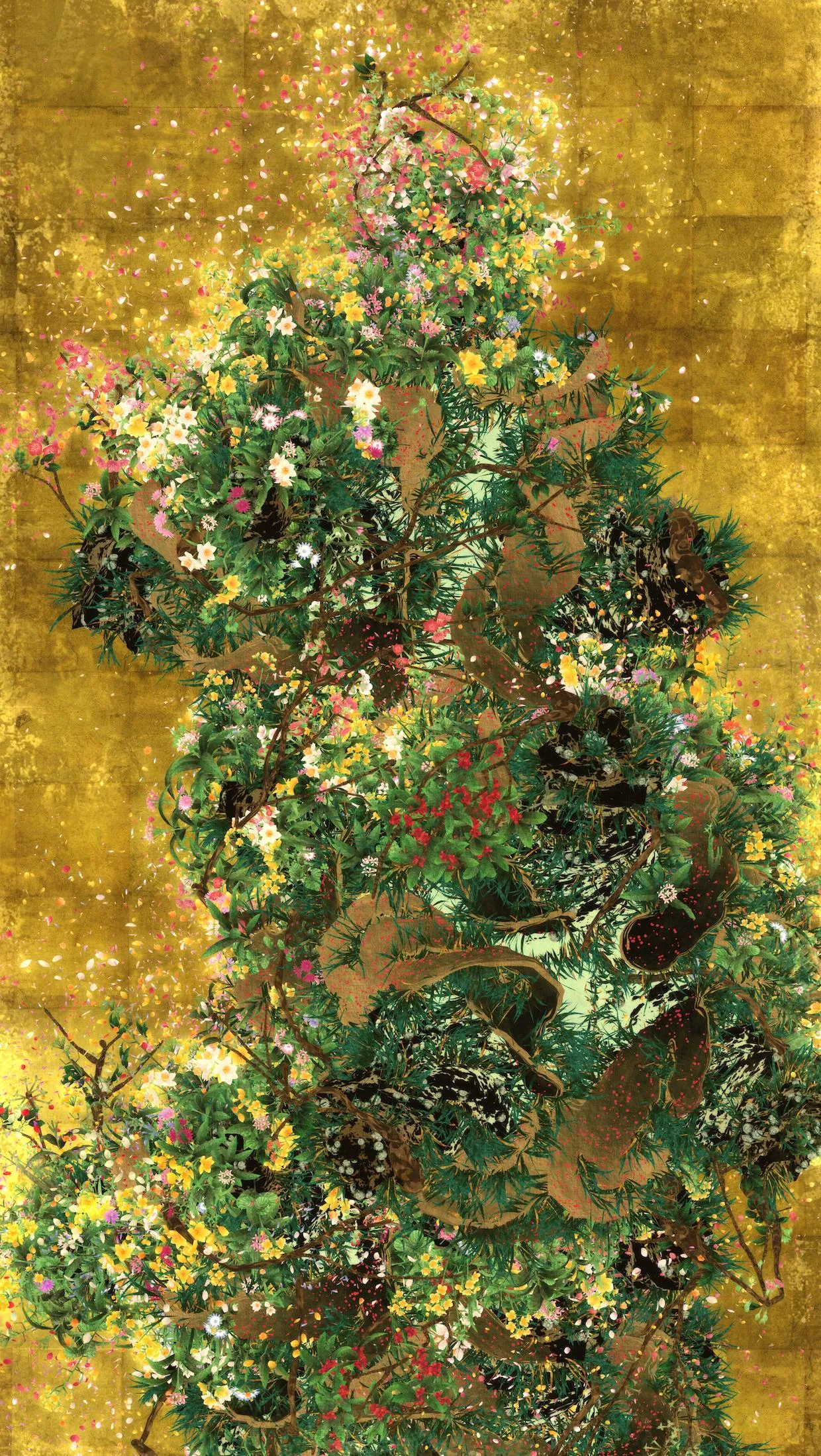
الحياة تحيا بقوّة الحياة 2

على الرغم من أن الذات والطبيعة يبدوان مختلفين، إلا أنهما في الواقع كيان واحد، لا ينفصلان عن بعضهما البعض. إن نقيض الانقسام ليس هو التوحد، وقد ندرك أن الوجود الذي يبدو متميزًا هو في الواقع جزء من كلٍّ واحد.
إن منافع الطبيعة وتهديداتها، وكذلك منافع وتهديدات الحضارة، مستمرة. ولا يوجد مصدر للشر المطلق، ولا يمكن رفضه بشكل مثالي. ومع ذلك فإننا نسعى إلى تأكيد الحياة في جميع جوانبها. إن الحياة جميلة.
في هذا العمل الفني، تمت كتابة (生 "سيه")، المقطع الذي يدل على الحياة، بشكل ثلاثي الأبعاد باستخدام الخط في الفضاء. والخط في الفضاء هو شكل من أشكال الخط المرسوم في الفضاء والذي كان تيم لاب يستكشفه منذ تأسيسه. يعيد العمل الفني بناء الخط في فضاء ثلاثي الأبعاد للتعبير عن عمق وسرعة وقوة ضربة الفرشاة، ثم يتم تسطيح هذا الخط باستخدام البنية المنطقية التي يطلق عليها تيم لاب الفضاء فوق الذاتي. وينتقل الخط بين بعدين وثلاثة أبعاد.
يبدو فضاء العمل الفني التقليدي، المؤطر بالعدسة أو المنظور، وكأنه على الجانب الآخر من سطح العمل الفني، حيث يصبح السطح بمثابة حدود، ويتم فصل الفضاء الذي يوجد فيه المشاهد عن فضاء العمل الفني. ومع ذلك، فإن إحدى خصائص الفضاء فوق الذاتي هي أن سطح العمل الفني لا يصبح حدودًا.وبالتالي فإن الفضاء الذي يوجد فيه العمل الفني يتجاوز حدود سطح العمل الفني ويتم إدراكه كما لو أنه موجود بشكل ثلاثي الأبعاد في نفس الفضاء الذي يقف فيه المشاهد. وفضاء العمل الفني متواصل مع الفضاء المادي للمشاهد.

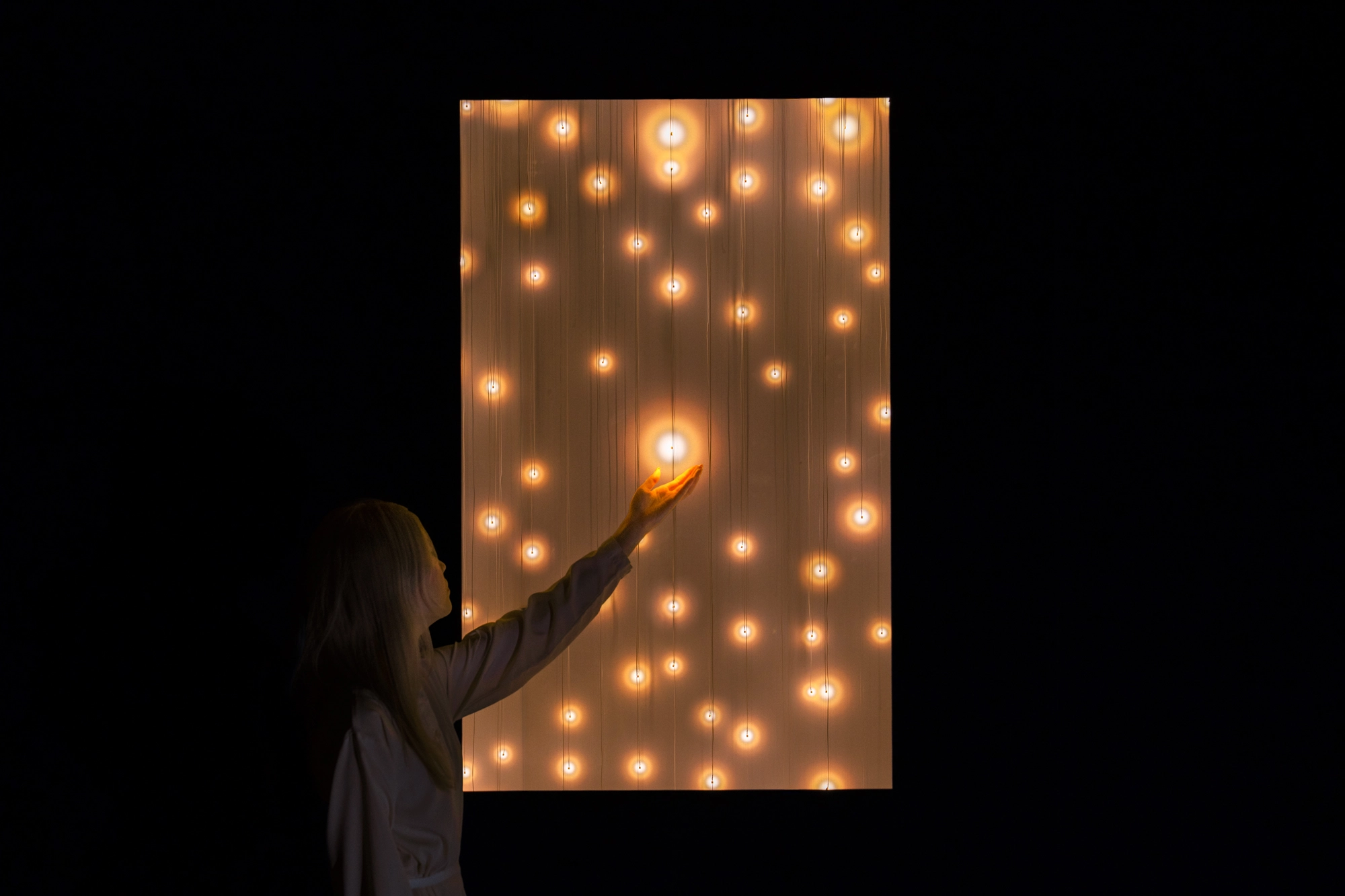
Sea

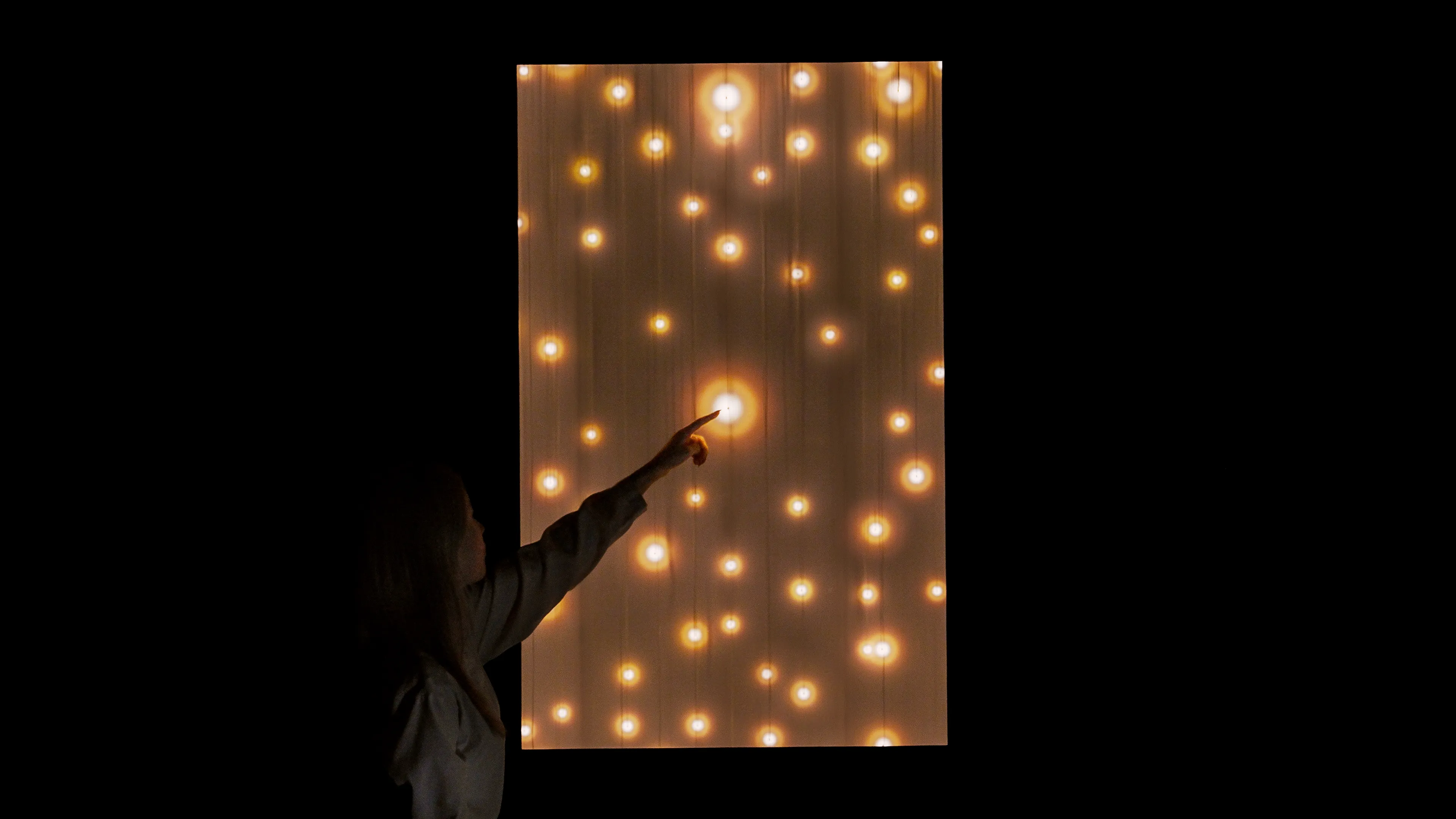
This painting comes into existence for the first time only at the moment when a person views the artwork. It exists as infinite possibilities of images until it is viewed, at which moment it is determined as a single image. The image continues to change with the passage of time, even if the viewer does not move. Furthermore, in response to the environment and the moving body of the viewer, its appearance changes each time, and shines from the depths of the pictorial world. While appearing across the entire screen, the image emerges as different each time within the perception of each viewer.
This pictorial space is not an illusion of depth depicted on a flat painting. It is a space that emerges at a moment through time, light, the environment, and the movement of the viewer's body. While appearing on the screen, the pictorial space is continuous with the real space where the body exists, and expands into the depths of the screen as a space of light.
The only physical material is copper. The image is generated within the relationship among the physical material, light, the environment, body, and perception, without the medium of video.
This artwork is an attempt to expand painting from a completed image, or an illusion of space depicted on a flat plane, into a pictorial space that is continuous with the real space and is generated from the relationship among time, light, the environment, the body, and perception. The image is a bodily space of light that emerges at each moment within perception.
حول تيم لاب
"تيم لاب" هو عبارة عن مجموعة فنيّة عالمية (تأسست عام 2001)، يتم التعاون فيها بهدف التعمّق في نقاط الالتقاء بين الفن والعلوم والتكنولوجيا والعالم الطبيعي. فعبر الأعمال الفنيّة، تهدف مجموعة من الخبراء ذوي الاختصاصات المختلفة، بمن فيهم فنانين ومبرمجين ومهندسين، وأخصائي رسوم متحركة، وعلماء رياضيات ومهندسين معماريين، إلى استكشاف العلاقة بين الذات والعالم وأشكال جديدة من الإدراك. وفي محاولة إلى فهم العالم حولهم، يسعى الناس إلى فصله إلى وحدات مستقلة يتصوّرون حدودًا في ما بينها. ولكن "تيم لاب" يسعى إلى تجاوز هذه الحدود التي تحدّ رؤيتنا ونظرتنا إلى العالم وإلى العلاقة بين الذات والعالم واستمرارية الزمن. فكل شيء قائم في استمرارية بلا حدود، في استمرارية مستدامة وهشّة وخارقة في آن واحد. تتواجد أعمال "تيم لاب" من ضمن المجموعة الدائمة لمعرض فكتوريا الوطني في ملبورن، ومعرض الفنون نيو ساوث ويلز في سيدني، ومعرض فنون جنوب أستراليا في أديلايد، ومعرض أستراليا الوطني في كانبيرا، ومتحف الفنون آموس ريكس في هلسنكي، ومتحف الفن المعاصر في لوس أنجلوس، ومتحف الفن الآسيوي في سان فرانسيسكو، ومتحف مجموعة بوروسان للفن المعاصر في إسطنبول، وجمعية متحف آسيا في نيويورك، وغيرها.

دليل الزوار

تفاصيل المكان

teamLab: Everything Exists in Infinite Continuity

الفترة

‎2027.2.21(Sun) - ‎2026.9.22(Tue)

الوقت

Tuesday - Sunday 10:00 - 16:30

العطل

Monday

وسائل المواصلات

العنوان

Smart Museum of Art, University of Chicago
5550 S Greenwood Ave, Chicago, IL 60637

للاستفسار

Smart Museum of Art, University of Chicago

Florie Hutchinson

florie.hutchinson@gmail.com

(415) 515-4696